
Russell
Sealed. Vented. Staying put.
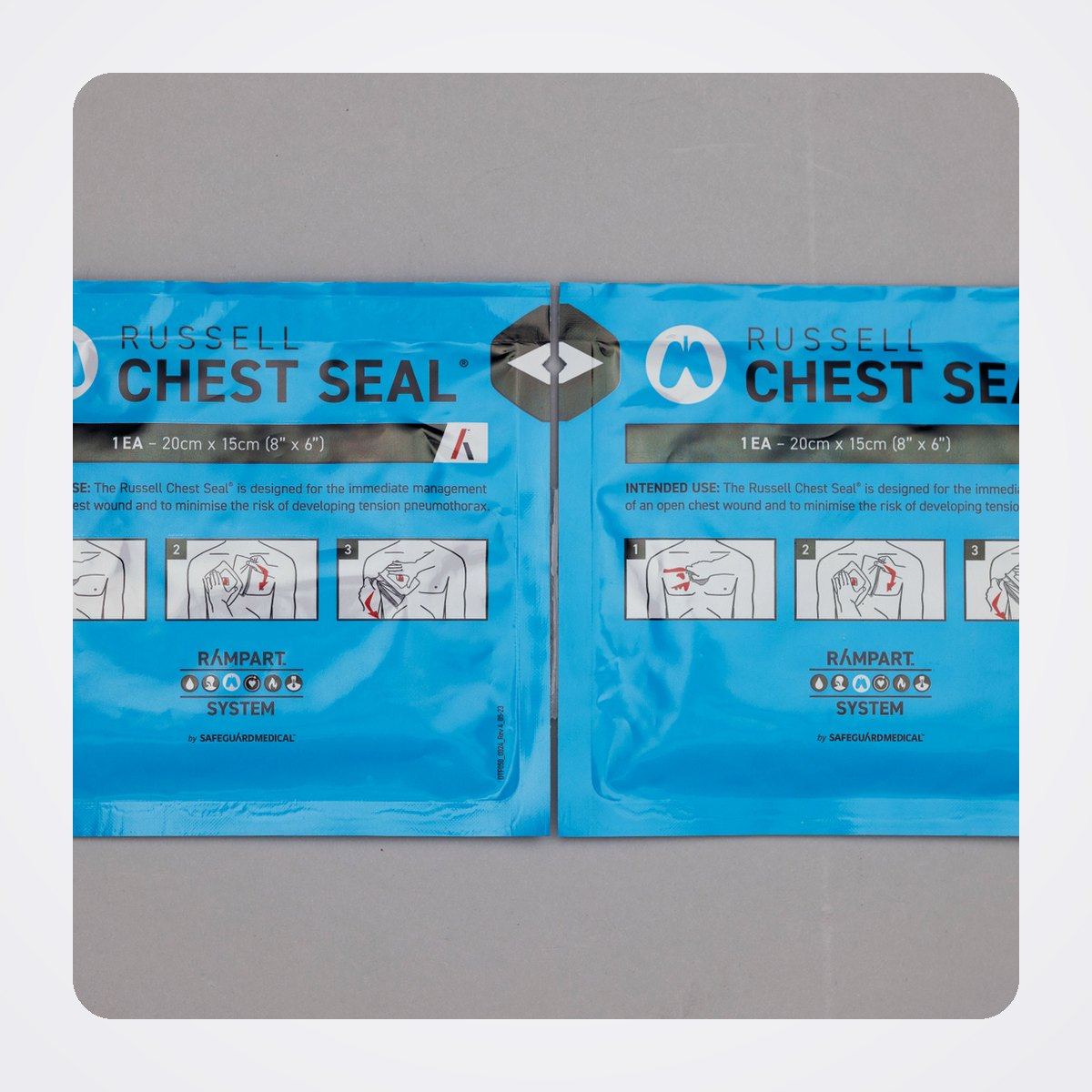
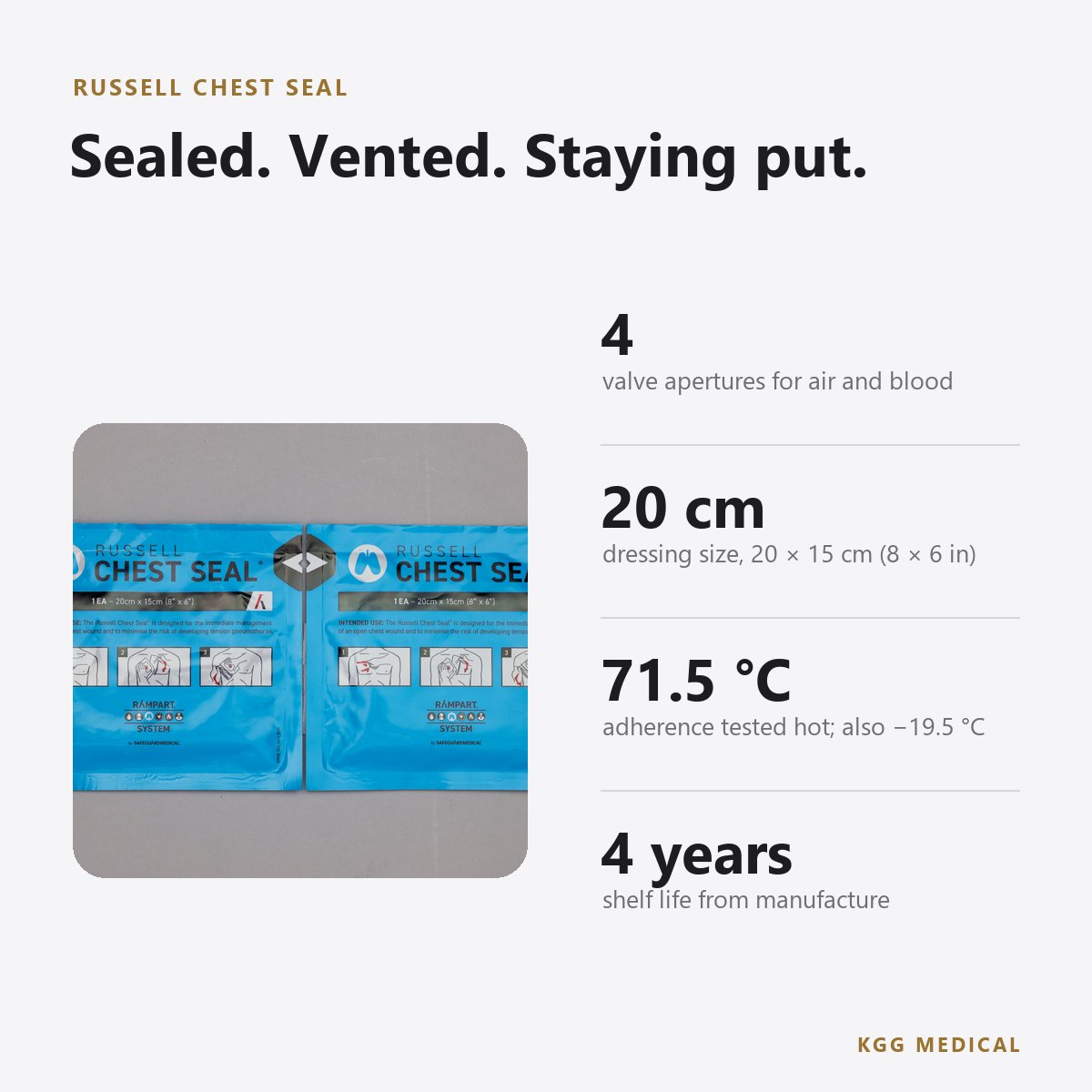
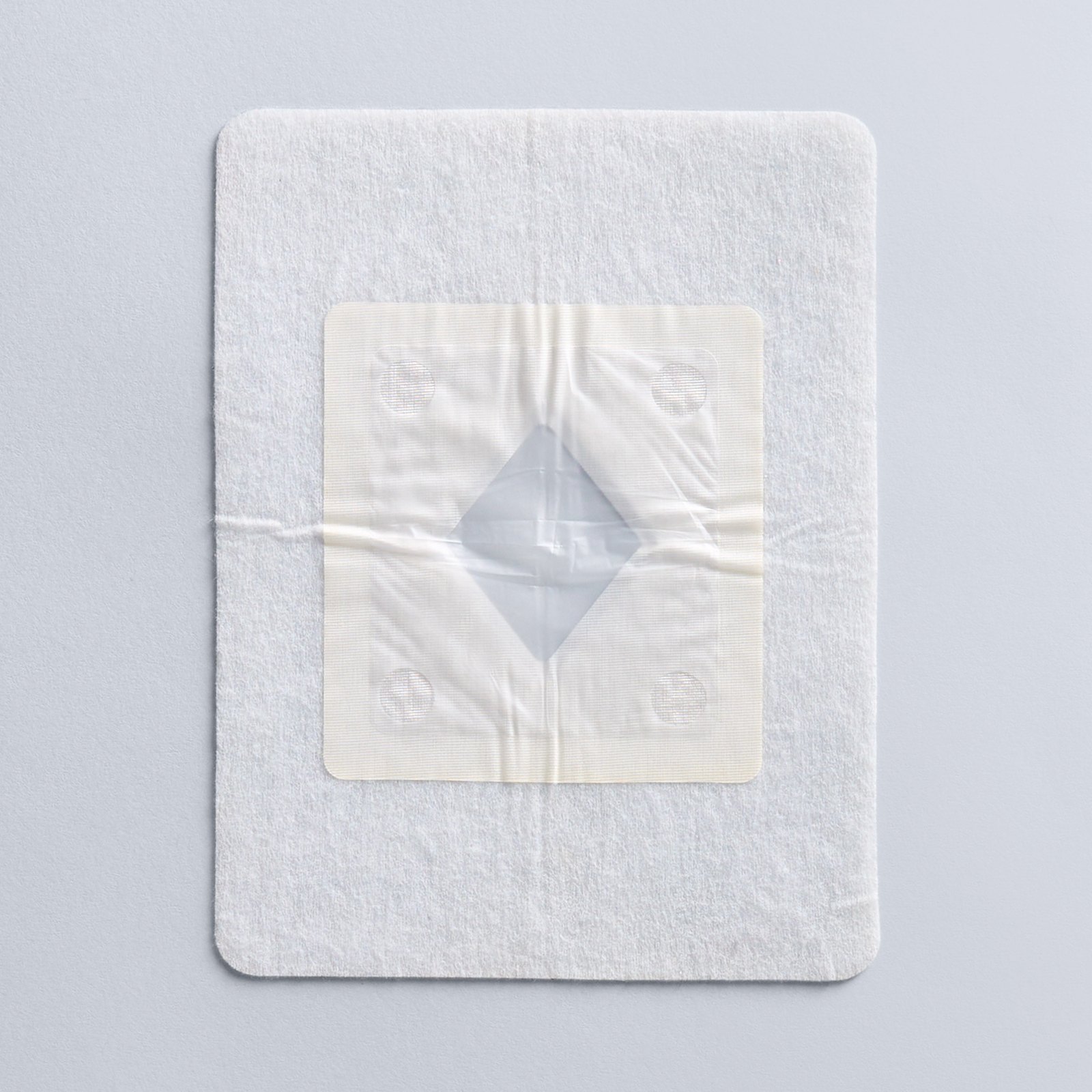
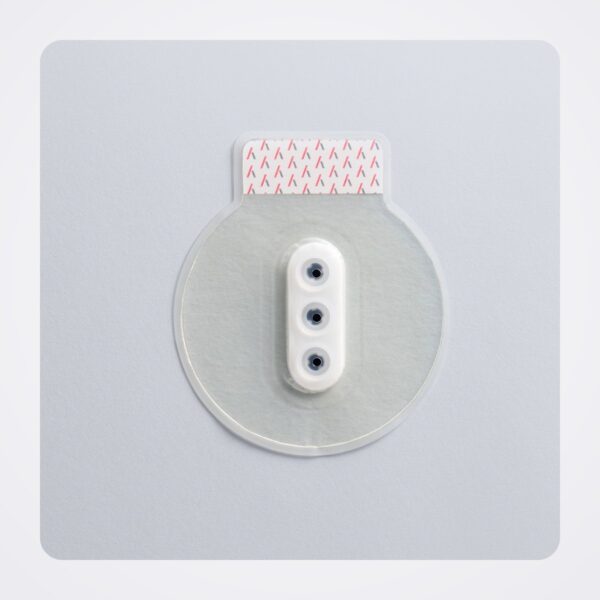
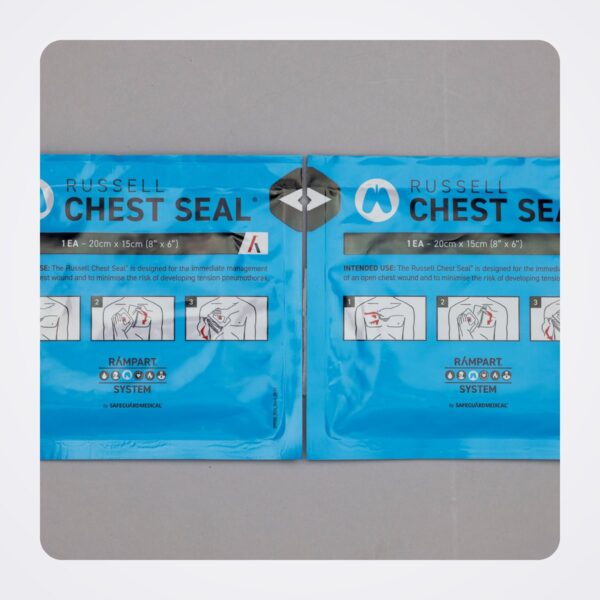
The Russell Chest Seal is a hydrogel dressing on a non-woven fabric base, with an integral low-profile valve that lets air escape from the pleural cavity without being drawn back in. Four large peripheral apertures allow air and blood to drain, and a large central opening in the base helps place it accurately over the wound. Safeguard reports no breaches in adherence when tested at −19.5 °C and 71.5 °C, including in the presence of hair, blood and sand.
Key specifications
Why the Russell Chest Seal
Air out, not in
The integral valve lets air leave the pleural cavity without being drawn back in, aiming to limit lung collapse and help the lung re-inflate.
Four ways to drain
Four large peripheral apertures let both air and blood escape, so the valve is less likely to clog in a bleeding wound.
Sticks in heat and cold
The patented hydrogel showed no adherence breaches in testing at −19.5 °C and 71.5 °C, even with hair, blood and sand on the skin.
Placed in one move
A large central opening shows exactly where the wound sits, and the silicone-coated liner peels away without stretching the dressing.
Where it is used
Military and tactical medicine, EMS and ambulance services, emergency departments and humanitarian field teams.
In the box
One Russell Chest Seal, 20 × 15 cm (8 × 6 in) vented chest dressing, per pouch; a two-pouch twin pack (PP0068) is also listed. Pack sizes and configurations are confirmed with the quotation.
Clearance & compliance
FDA Class I device, listed by Safeguard Medical Technologies Ltd (product code NAD, occlusive wound dressing; FDA registration and listing database checked 12 Oct 2026) · CE/UKCA status not stated in current Safeguard documents. Supplied subject to registration in each destination country (MOHAP, DoH, DHA, SFDA or the equivalent authority). Certificates, declarations of conformity, IFUs and registration documents are provided with every quotation. Specifications are indicative and subject to manufacturer change.
Where a country has an official agent or authorised distributor, we source the item through it — or directly from the manufacturer if necessary. Product names, trademarks and images belong to their respective owners.
Questions
Is the Russell Chest Seal available in the UAE and the GCC?
KGG sources the Russell Chest Seal on request for ambulance services, defence and security buyers, hospitals and trained first-aid teams in the UAE, Saudi Arabia, Qatar, Kuwait, Bahrain and Oman. It is supplied subject to registration in each destination country, and availability is confirmed with each quotation.
How do I get a price?
Add the Russell Chest Seal to your quote list or use Request a quote. We reply with pricing, lead time and the documents available for your country.
How long can it stay in place?
Safeguard's EU data sheet says the seal remains adhered over many hours and is comfortable for the patient in prolonged use, up to 24 hours.
What is the shelf life?
The current Safeguard data sheet (July 2025) gives 4 years from the date of manufacture. Older sheets quote 3 or 5 years, so we confirm the dating on the stock offered.
Who makes the Russell Chest Seal now?
It is a Safeguard Medical product. It was developed by Prometheus Medical in the UK, which became part of Safeguard; the Prometheus training business was sold separately in 2024.
Is there a twin pack?
Yes. Safeguard lists an individual pouch (PDF0680 / IN0680) and a twin pack (PP0068) for entry and exit wounds.
Request a quote
Get pricing for the Russell Chest Seal.
Tell us the quantity, delivery city and whether you are ordering for a facility, a team or a patient. We reply with pricing, lead time and the regulatory documents for your country.

 English
 العربية