Global Health Exhibition 2026 · Riyadh
Registration is handled by the organiser; the exhibition is open to health-care professionals aged 16 and over. To meet KGG’s leadership team in Riyadh, request a time below.
Saudi Arabia opens the Gulf’s largest health-care marketplace on Monday with a number that no other event in the region can match: US$35.5 billion. That is the value of the agreements signed at last year’s Global Health Exhibition in Riyadh, according to the organiser’s closing report, which also counted more than 130,000 attendees, 607 speakers and a 54 per cent rise in international visitors. The ninth edition runs from Monday 26 to Thursday 29 October 2026 at the Riyadh Exhibition and Convention Center in Malham, under the patronage of the Ministry of Health and the theme “Invest in Health”, the Saudi Press Agency reported when the ministry announced it in August.
The scale is set to grow again. The ministry expects more than 130,000 health-care professionals, 2,200 exhibiting brands, participants from more than 100 countries, 1,000 investors and 500 speakers across four forums: the Leaders Summit, the Medical Excellence Forum, the Digital Health Forum and an investors’ forum, the Gulf Daily News reported from the same announcement. The event is organised by Tahaluf, the joint venture of Informa, the Saudi Federation for Cybersecurity, Programming and Drones and the Events Investment Fund, and is positioned as a working instrument of the Health Sector Transformation Programme under Vision 2030, according to the organiser.
Kanan General Group (KGG) brings a narrower question to the week than most of the industry. The group supplies point-of-care, imaging and portable medical devices and the Envision cloud radiology platform to hospitals and clinics across the GCC, and what interests it in Riyadh is less the headline contracts than the thousands of private clinics that will have to put them to use.
A ministry that buys like an investor
Riyadh does not run a trade fair so much as a procurement season. The ministry that holds the patronage is also the largest buyer in the room, and the exhibition’s “Deals Hub” exists to turn the week into signed paper. Last year’s headline agreements included US$8.4 billion for hospital and health-care infrastructure, more than US$3.24 billion committed to venture and strategic funds, and digital-health partnerships with HUMAIN, Lean and Google Cloud, by the organiser’s count. Investors who took part in 2025 managed US$65 billion in assets between them, and this year’s invitation-only Capital Xchange programme lists TVM Capital Healthcare, Abdul Latif Jameel Enterprises, Bupa’s investment arm, Mayo Clinic and Redesign Health among its participants, the organiser said in July.
For a supplier anywhere in the Gulf, the week matters for a plain reason. The kingdom is the region’s largest health market by population, and what Riyadh specifies this week becomes the template that tender boards from Kuwait to Muscat copy next year. Three editions ago the agenda was beds and hospitals; it is now data, prevention and the private sector’s share of care.
Who is on the stage, and who is writing the cheques
The speaker list mixes global industry with the National Health Service and the Saudi system itself. Confirmed names include Catherine Estrampes, chief commercial and growth officer of GE HealthCare; Sir Jonathan Symonds, chair of GSK; Professor Declan O’Regan of Imperial College London; Dr Samuel Sia of Columbia University; Professor Shafi Ahmed of Barts Health NHS Trust; Dr Tamara Sunbul, group chief information officer of Fakeeh Care Group; Antony Kalindjian of SoftBank Vision Fund; Vishva Mehta of Blackstone; and Dr Sami Yusuf, chair of corporate development at Mayo Clinic, according to the organiser’s September announcement. The Digital Health Forum adds Dr Arwa Alameen, the Ministry of Health’s director general of statistics and information; Professor Ged Byrne, director of global health at NHS England; Christopher Rockenbach of Great Ormond Street Hospital; and Dr Adham Ismail of the WHO’s Eastern Mediterranean office.
On the floor, the organiser has named Mayo Clinic, Karl Storz, Canon Medical Systems, BD, Stryker and Baxter among the exhibitors, with Oracle, Dexcom and InterSystems in the digital-health halls. The NextGen Pitch Competition brings 54 start-ups and scale-ups to compete for a SAR 100,000 prize fund, and the Digital Health Forum promises a “Shark Tank” of live pitches and more than 120 international speakers. “Saudi Arabia is transforming healthcare at an extraordinary pace,” Rachel Sturgess, executive vice president of Tahaluf, said when the speakers were announced.
The 3,607 buildings the deal hub rarely mentions
The money on the stage flows mostly to the large systems: the Ministry of Health’s hospitals, the health clusters, the listed private groups. The ministry’s own 2024 report, however, describes a different landscape at street level. The private sector operated 166 hospitals with 20,624 beds, and 3,607 private medical complexes, Al Watan reported from the ministry’s figures. Those complexes, the multi-specialty polyclinics on the main roads of every Saudi city, are where a large share of first consultations, scans and chronic-disease follow-ups take place. Most are small and medium clinics, owned by a physician or a family, with no procurement department and no IT team.
The state’s own infrastructure is racing ahead of them. Seha Virtual Hospital, which Guinness World Records recognises as the world’s largest, now links 241 hospitals and more than 1,400 health centres across 114 specialties, the ministry said in August. A radiologist in Riyadh can read a scan taken in Najran in minutes, provided the scan reaches the network. A great many images from the private complexes never do. They sit on a workstation, or go home with the patient on a CD.
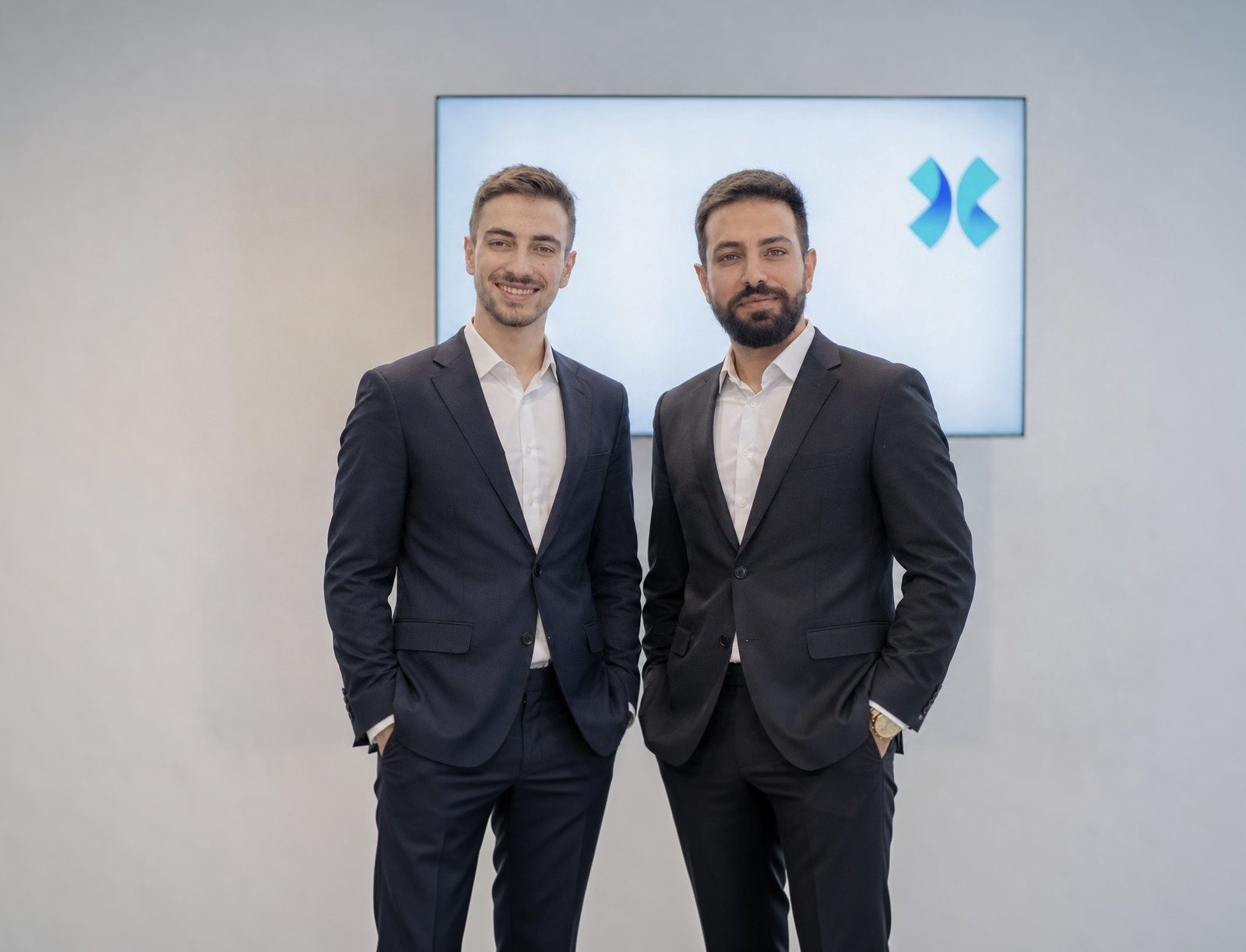
That gap is where Dr Mahmoud Tamimi, Co-Managing Director of KGG and the physician who leads its work on what clinics in the field actually need, places the group’s argument about this week.
Doctors in a small or medium clinic may see dozens of patients a day. They do not need another platform presentation. They need a scan at the bedside, a result they can send to the hospital they refer to, and a device they know is registered and will be serviced. All of that is on the exhibition floor this week. Our job is to match it to what those clinics actually use every day, and to do the registration and the training properly.
What a clinic in Buraidah needs on a Tuesday
The equipment list of a small or medium Saudi clinic has changed more in five years than in the twenty before. Diagnostics that once needed a hospital department now fit on a desk: an ultrasound probe that pairs with a tablet, a spirometer that plugs into a phone, a capnograph the size of a television remote, a bladder scanner on a trolley. Screening that used to require a referral can happen in the waiting room: a handheld retinal camera for diabetic eye checks, a hearing test on a tablet, a defibrillator cabinet by the reception desk. Diabetes care, the kingdom’s largest chronic-disease burden, is moving onto sensors worn for a year and socks that measure foot temperature.
Beyond the clinics, the same shift is reaching the workplaces. The giga-projects and the oil and gas fields employ hundreds of thousands of outdoor workers through a summer that regularly passes 45 °C, and heat-strain monitoring, cooling and site first aid have become line items in contractor tenders rather than afterthoughts. Site clinics now stock the haemostatic dressings and tourniquets that military medicine made standard, and transport ventilators and warming blankets for the long drive to the nearest emergency department.
None of this is exotic. All of it is sold on the exhibition floor this week. The difficulty for the clinic is not finding the device but buying it legally, connecting it, and keeping it working.
The paperwork is the product
No medical device may circulate in Saudi Arabia without a marketing authorisation from the Saudi Food and Drug Authority, and a manufacturer based outside the kingdom must act through a Saudi-based authorised representative, licensed for that manufacturer and renewed annually, under the implementing regulation of the Law of Medical Devices. A manufacturer may appoint only one representative for the same group of devices, and importers, distributors and representatives must hold a quality-management certificate to the Saudi adoption of ISO 13485, the authority’s guidance for authorised representatives sets out.
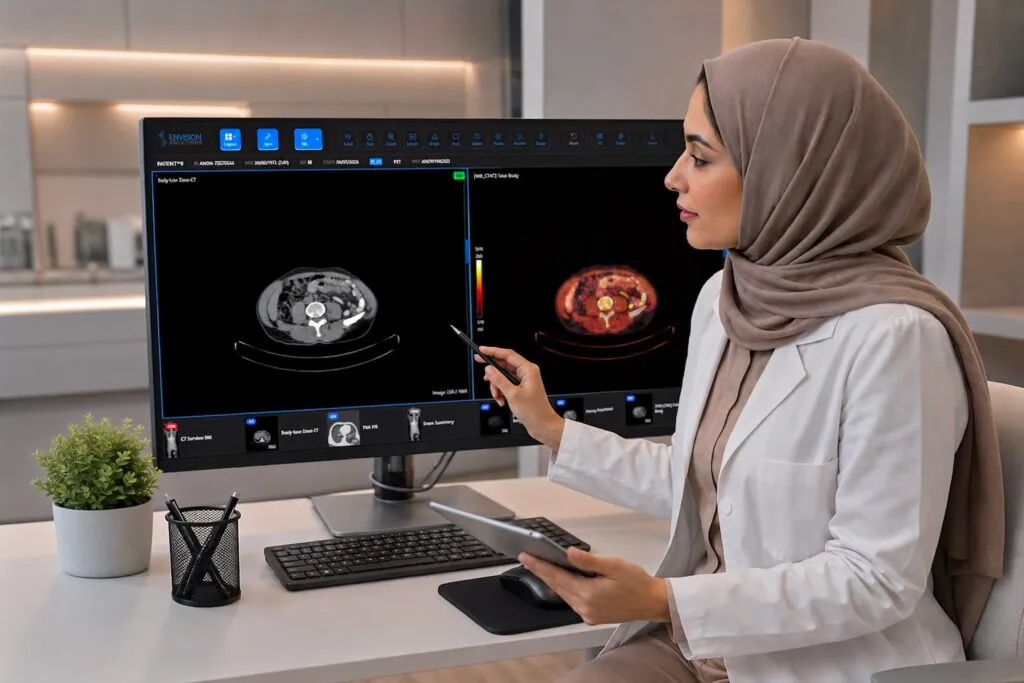
For a Buraidah polyclinic, that means the device on the stand is only half the purchase. The other half is the representative’s licence, the authorisation number, the Arabic instructions for use, the installation, the training and the contract that brings a technician back when the unit fails. KGG works on that connective layer. It supplies imaging, point-of-care and portable medical devices to hospitals and clinics across the GCC, supplied subject to registration in each destination country and, in Saudi Arabia, through locally licensed partners. It also holds exclusive GCC rights to Envision, a cloud-native radiology information system with hybrid PACS and a browser-based DICOM viewer, offered on a pay-per-use basis and built so that a small imaging centre can hand its studies to a national exchange rather than to a CD drawer. The company’s view, formed in procurement meetings rather than on conference stages, is that the work between a manufacturer and a small clinic, the registration, the integration, the training, is done by nobody unless the distributor does it.
The exhibition by the numbers
Four days, 26 to 29 October 2026, at the Riyadh Exhibition and Convention Center in Malham, north of the capital. More than 130,000 professionals, 2,200 brands, participants from more than 100 countries, 1,000 investors and 500 speakers, by the Ministry of Health’s announcement; four forums and a Digital Forum that continues online until 20 December with 30 webinars, by the organiser’s website. Last year: US$35.5 billion in agreements, or more than SAR 133 billion in the ministry’s own accounting, 607 speakers of whom 307 came from abroad, and a NextGen prize won by Exoheal, a robotic glove for hand rehabilitation after paralysis. The organisers describe the event as “the fastest-growing health event in the world”, a phrase from the vice minister of health that is best read as a statement of ambition rather than a measurement.
The Leaders Summit moves from economic growth and resilience to the shift from treating illness to preventing it. The Medical Excellence Forum covers advanced therapies, predictive diagnostics and AI-enabled early detection. The Digital Health Forum takes interoperability, connected care and data governance, with live product demonstrations. The Capital Xchange Forum deals with market entry, foreign direct investment and capital formation. It is a business event for professionals aged 16 and over; children are not admitted.
What executives should take from the week
For a hospital group or a health cluster, the lesson is sequence: the virtual hospital, the exchange and the AI reading tools only work on images and data that arrive. The clinics that feed the network are mostly private, small and medium, and they will connect only when connecting is cheaper than not connecting.
For the owner of a small or medium clinic, the economics have moved in their favour. Point-of-care devices have fallen in price and size, cloud radiology no longer needs a server room, and a pay-per-use platform puts a six-room polyclinic on the same data grid as a tertiary hospital. The question to put to every supplier this week is not “what does it cost” but “who is the authorised representative, what is the authorisation number, and who comes when it breaks”.
For suppliers and distributors, the signal from Malham is that the Saudi tender is changing shape. The buyers who return are those who can deliver registered hardware, software, Arabic documentation, training and service as one offer, through partners licensed in the kingdom, rather than a product alone.
Riyadh has turned a health exhibition into an annual investment round, and the industry is arriving in force because the kingdom is both the region’s largest buyer and its most ambitious reformer. The real test of the week, though, is not the total on the deals board on Thursday evening. It is whether, a year from now, more of the 3,607 private complexes between Tabuk and Jizan are connected, registered and served. That, more than any keynote, is the business to watch.
Meet KGG’s leaders in Riyadh
Book a private meeting with KGG’s leadership team, including Dr Mahmoud Tamimi, during the Global Health Exhibition week, 26–29 October. Tell us what you would like to discuss, and we will confirm the time and meeting point by email.
- Choose a day and a topic
- KGG confirms the time and meeting point
- Meet the leadership team in Riyadh
Your request has reached us
KGG's team will email you to confirm the time and the meeting point in Riyadh. A copy of your request is in your inbox.
 English
 العربية