
iCare
Any position. Every patient.
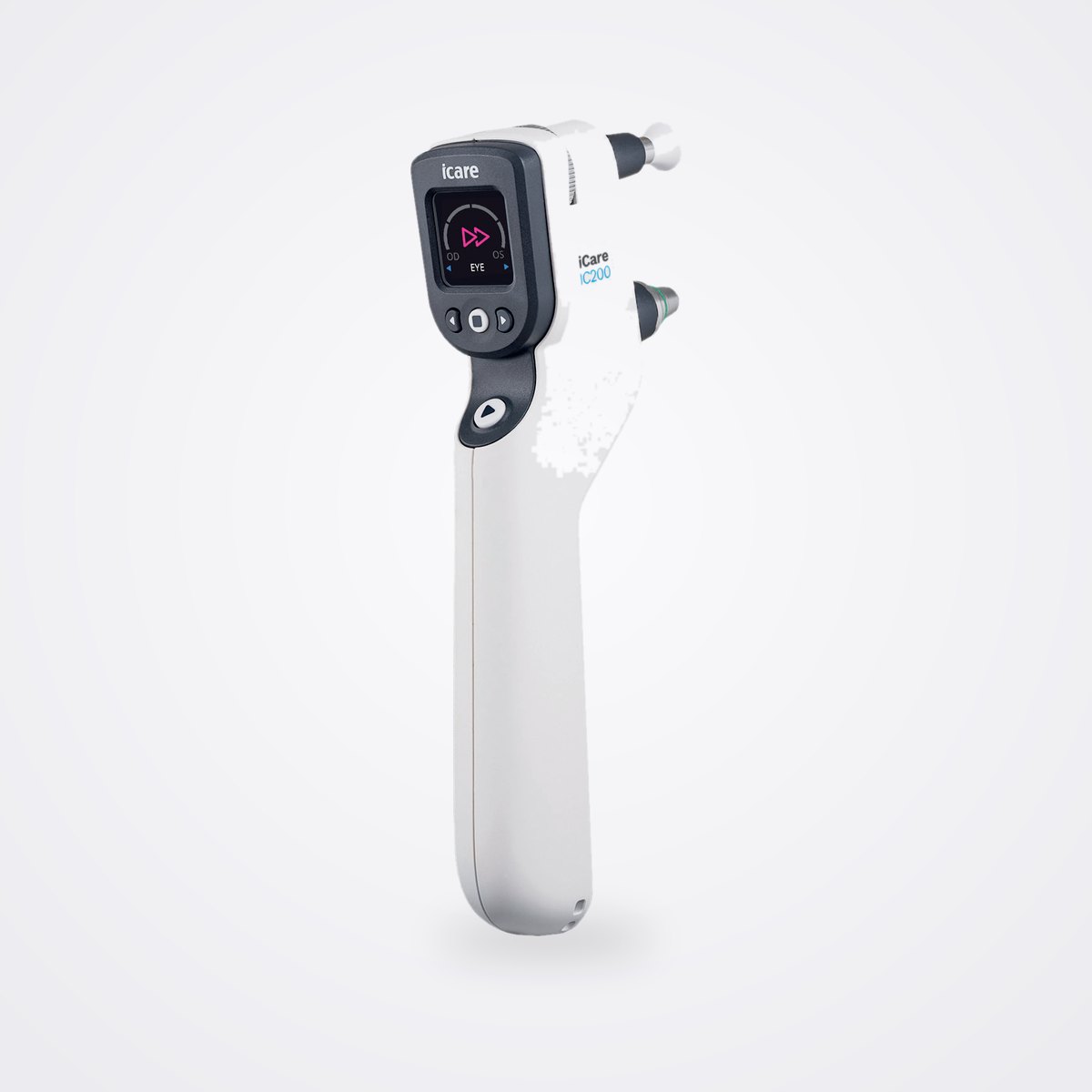
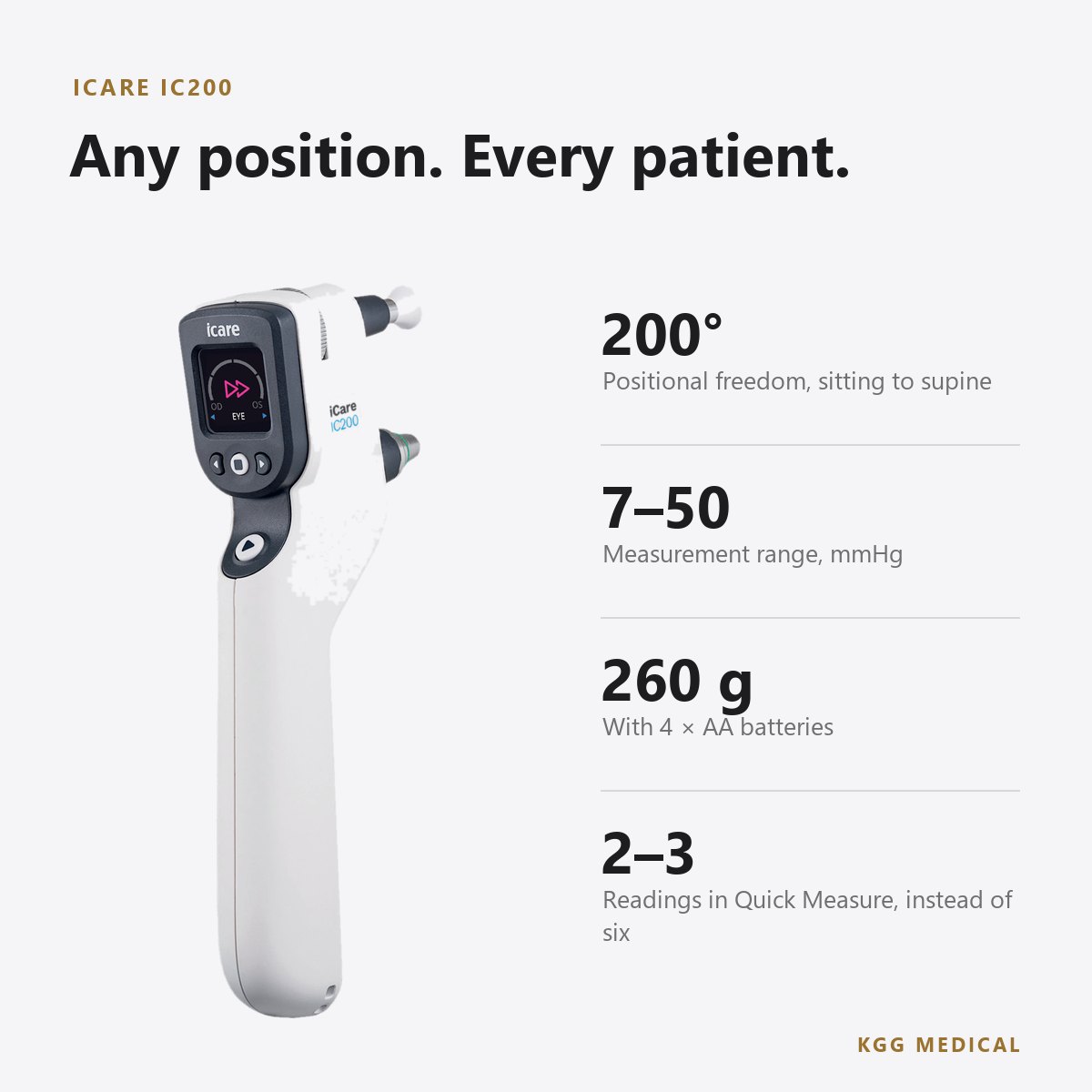
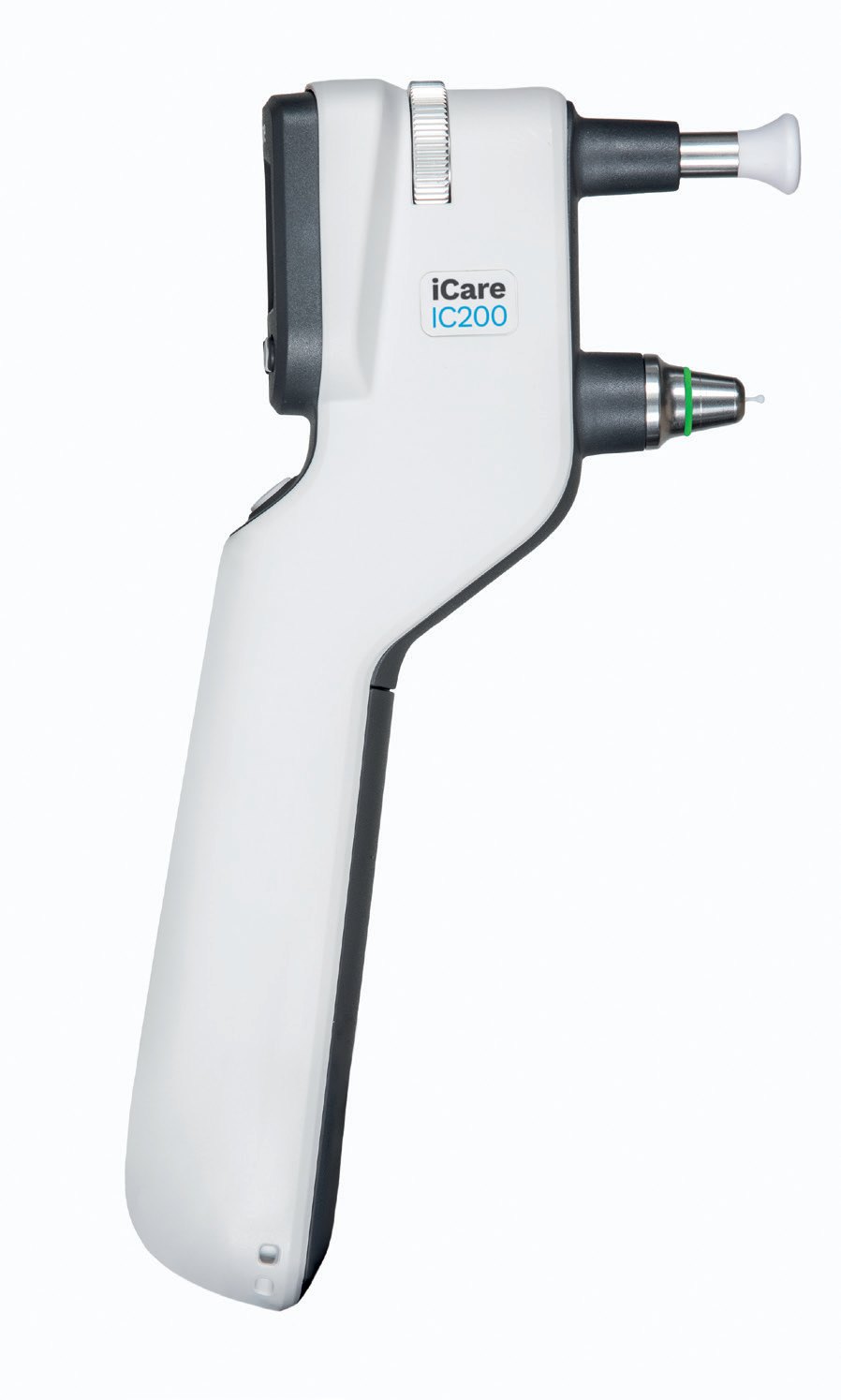
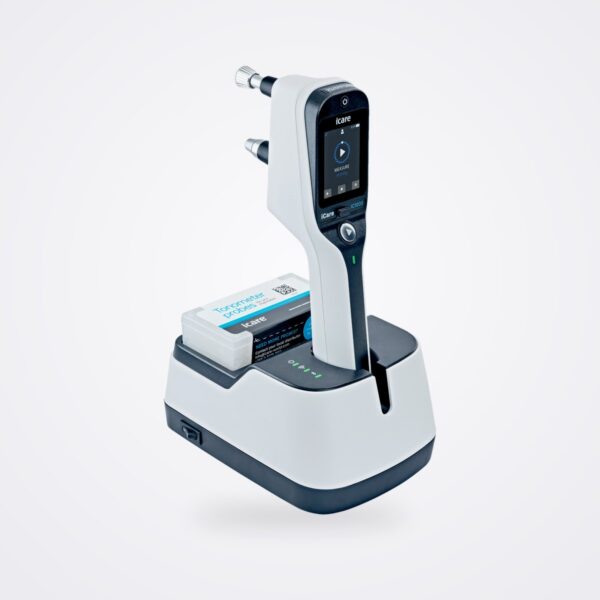
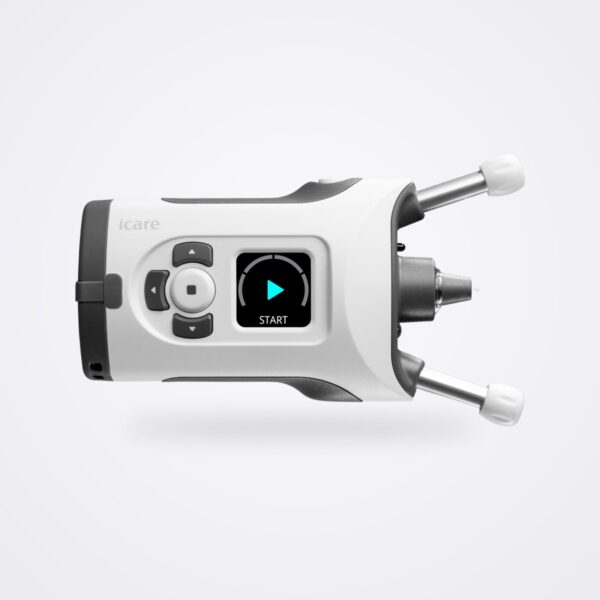
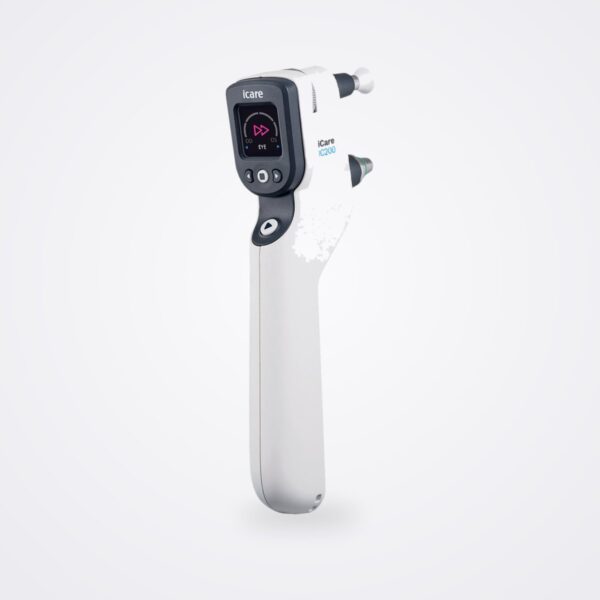
The iCare IC200 uses iCare's patented rebound technology: a light, single-use TP01 probe touches the cornea momentarily and the device calculates IOP from its movement. With 200 degrees of positional freedom it measures standing, sitting, reclined, supine and lateral recumbent patients, so it works in operating theatres, emergency departments and paediatric care as well as in the clinic. A green or red light at the probe base confirms alignment, Quick Measure needs two or three readings instead of six, and results can be printed or sent to iCare CLINIC over Bluetooth.
Key specifications
Why the iCare IC200
200 degrees of freedom
Measure IOP whether the patient is standing, sitting, reclined or lying supine. Useful in theatre, recovery, emergency and on the ward, when the patient cannot be brought to a slit lamp.
No drops, no air
Rebound measurement needs no topical anaesthetic, air puff or calibration. The momentary probe contact is barely noticed, and iCare designed the IC200 for all patients, including children.
Alignment you can see
The EasyPos indicator at the probe base turns green when the tonometer is correctly positioned and red when it is not, before the measurement runs.
Quick Measure
Two or three rapid readings instead of the standard six cut test time to about one third of the default method, for patients who find tonometry difficult.
Results that travel
Print over Bluetooth, or transfer readings to iCare EXPORT and the iCare CLINIC software to store and analyse each patient's IOP history.
Where it is used
Ophthalmology and optometry clinics, operating theatres and recovery, emergency departments, paediatric eye care, wards and glaucoma services.
In the box
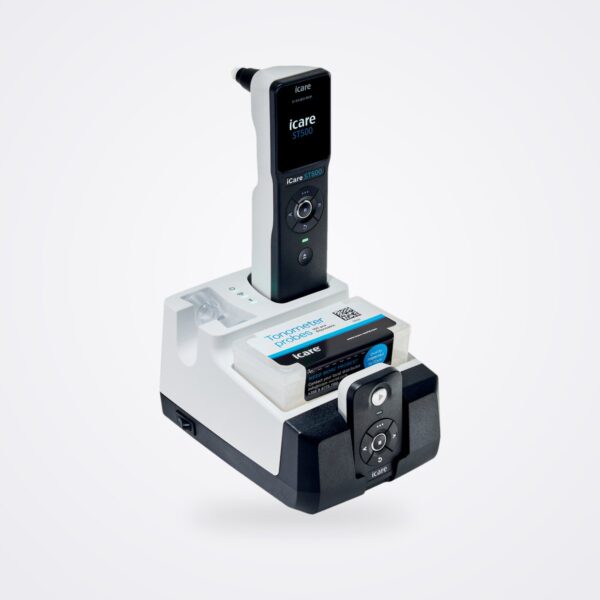
iCare IC200 tonometer as configured by the manufacturer. iCare TP01 probes are supplied separately in boxes of 100 or 600; a Bluetooth printer and iCare CLINIC software are optional. Pack sizes and configurations are confirmed with the quotation.
Clearance & compliance
FDA 510(k) cleared (K190316, 14 Jan 2020; K220852, 6 Oct 2022; product code HKY, 21 CFR 886.1930, Class II) · CE marked with notified body 0598, as shown on iCare's IC200 brochure (TA031-076-EN-3.2) and 2026 fact sheet. Supplied subject to registration in each destination country (MOHAP, DoH, DHA, SFDA or the equivalent authority). Certificates, declarations of conformity, IFUs and registration documents are provided with every quotation. Specifications are indicative and subject to manufacturer change.
Where a country has an official agent or authorised distributor, we source the item through it — or directly from the manufacturer if necessary. Product names, trademarks and images belong to their respective owners.
Questions
Is the iCare IC200 available in the UAE and the GCC?
KGG sources the iCare IC200 and TP01 probes on request for eye clinics, hospitals, emergency departments and screening programmes in the UAE, Saudi Arabia, Qatar, Kuwait, Bahrain and Oman, supplied subject to registration in each destination country. Availability and lead time are confirmed with each quotation.
How does the IC200 differ from the IC100?
Both use iCare rebound technology, the same 7–50 mmHg range and accuracy, and the same TP01 probes. The IC100 measures patients sitting or standing; the IC200 adds 200° positional freedom for reclined and supine patients, controls on the back of the device and Bluetooth connection to a printer or to iCare CLINIC. The newer IC1000 adds camera-guided alignment and a rechargeable battery.
Can it measure children and patients lying down?
Yes. iCare lists standing, sitting, reclined, supine and lateral recumbent positions, and describes the IC200 as suitable for all patients. Quick Measure shortens the test to two or three readings for children and patients who cannot hold still for long.
Which probes does it use, and does it need calibration?
Original iCare TP01 single-use probes, in boxes of 100 or 600, the same probes as the IC100. iCare states no calibration is needed; its probe FAQ advises replacing the probe base at least every six months to maintain accuracy. We can quote probes and probe bases with the device.
How does it compare with Goldmann applanation tonometry?
iCare specifies ±1.2 mmHg up to 20 mmHg and ±2.2 mmHg above, with a coefficient of variation below 8 %, and needs no anaesthetic or fluorescein. Rebound tonometry is widely used for screening and follow-up; where a reading needs confirmation, clinicians still refer to Goldmann at the slit lamp.
How do I get a price?
Add it to your quote list or use Request a quote. We reply with pricing, lead time and the documents for your country, and we can quote TP01 probes and a Bluetooth printer with it.
Request a quote
Get pricing for the iCare IC200.
Tell us the quantity, delivery city and whether you are ordering for a facility, a team or a patient. We reply with pricing, lead time and the regulatory documents for your country.
 English
 العربية