
Defibtech
Compressions that never tire.
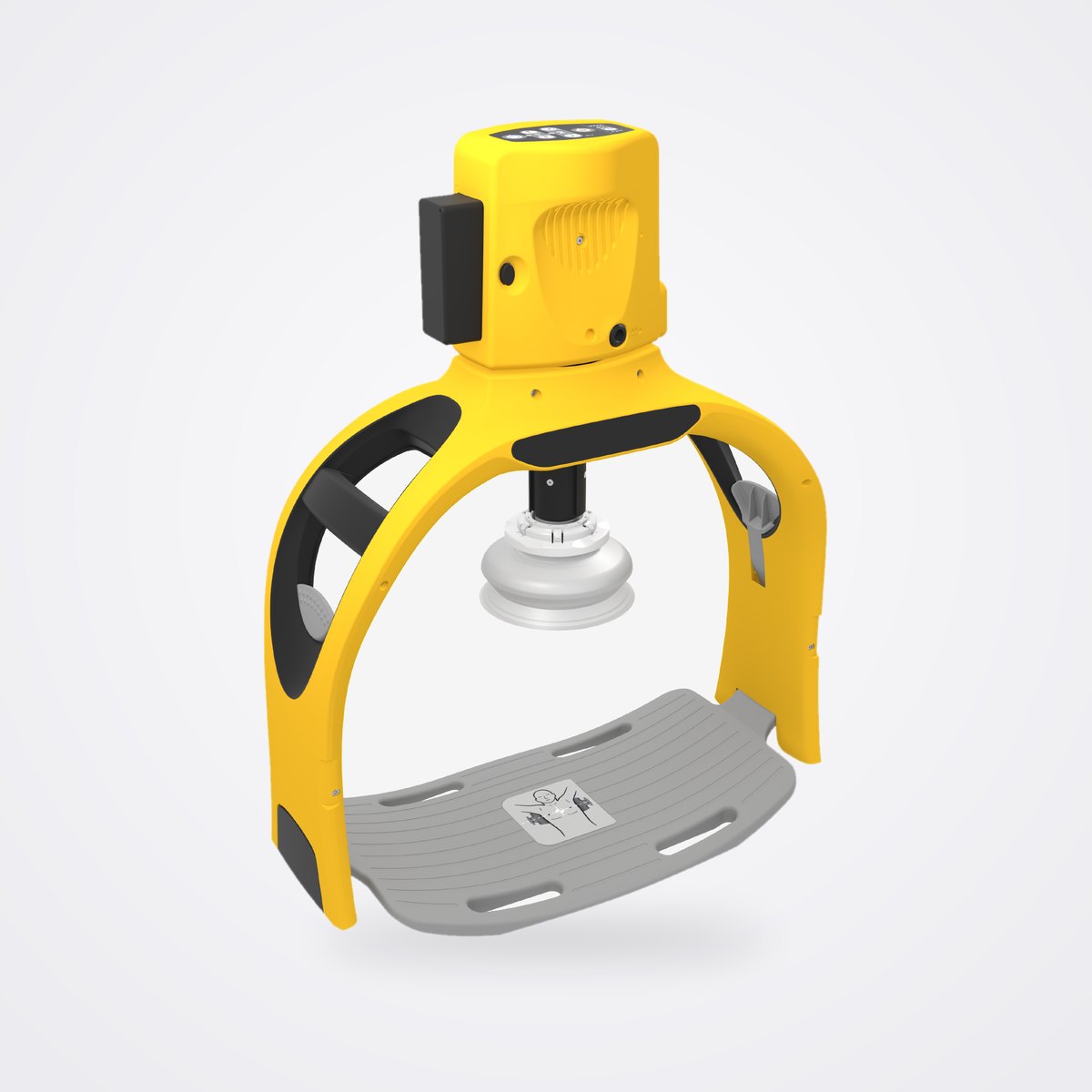
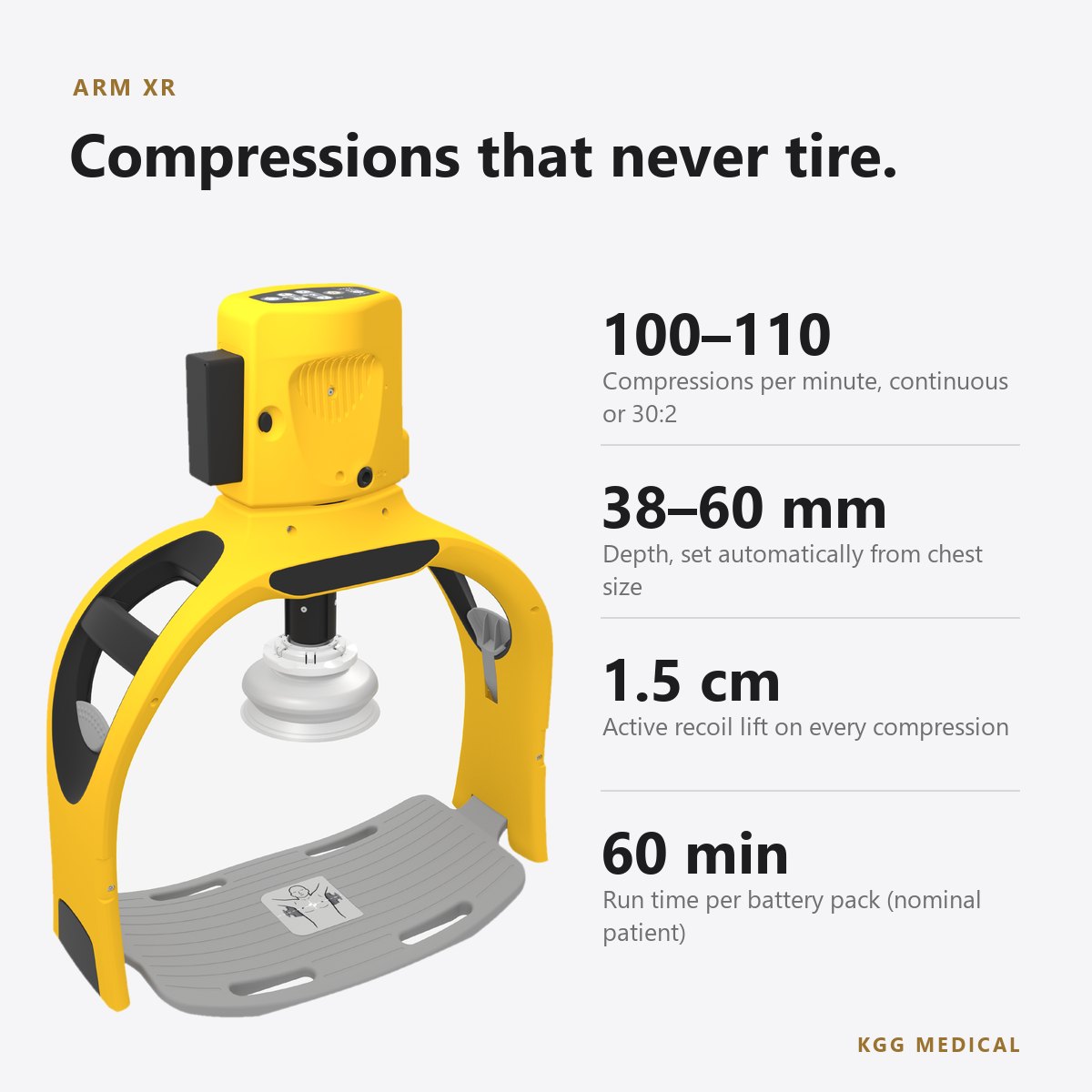
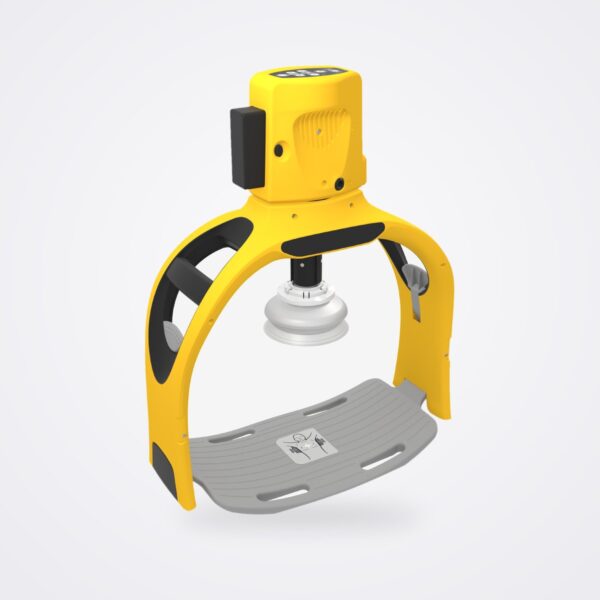
ARM XR takes over chest compressions so a smaller team can run a cardiac arrest, on scene, during transport and into the cath lab. A suction-cup piston compresses 38–60 mm at 100–110 per minute and lifts the chest up to 1.5 cm on every cycle for active recoil. Compression depth adjusts automatically to the patient's chest size, and use is not restricted by patient weight. One battery pack runs about an hour, and an AC adapter can power the device and charge the installed pack.
Key specifications
Why the ARM XR
Consistent compressions
A motor-driven piston delivers 100–110 compressions per minute at a depth set from the patient's chest size, in continuous or 30:2 mode, without rescuer fatigue.
Active chest recoil
The suction-cup pad lifts the chest up to 1.5 cm above the start position on every cycle, allowing chest rise during asynchronous ventilation or gasping.
Frame and backboard in one
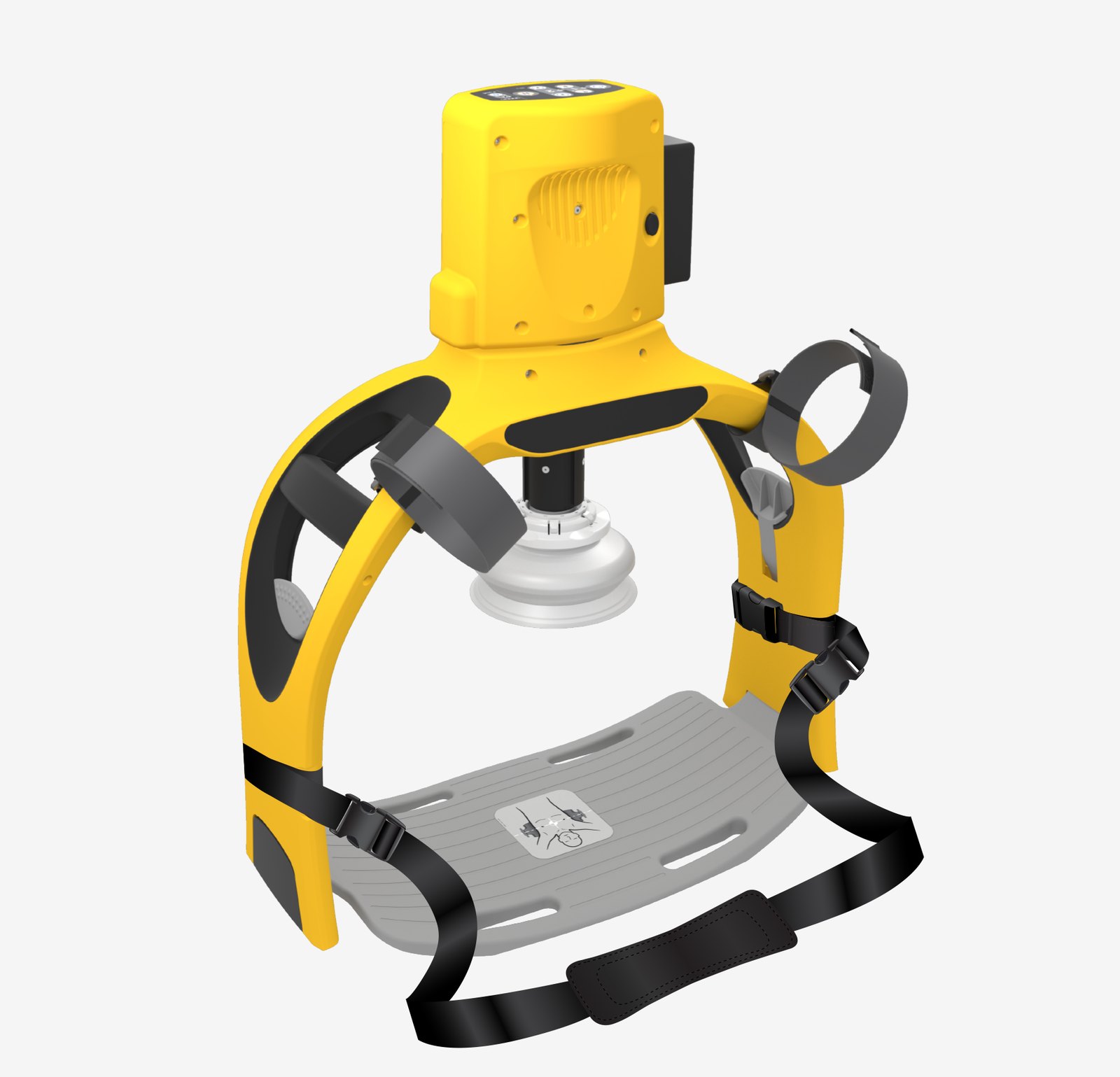
An integrated backboard and lightweight frame snap together around the patient, and straps secure the arms and device for transport to hospital or the cath lab.
An hour on one pack
The 5,600 mAh battery runs about 60 minutes per charge; the AC adapter can run the device and charge the installed pack in the vehicle or department.
Every rescue on record
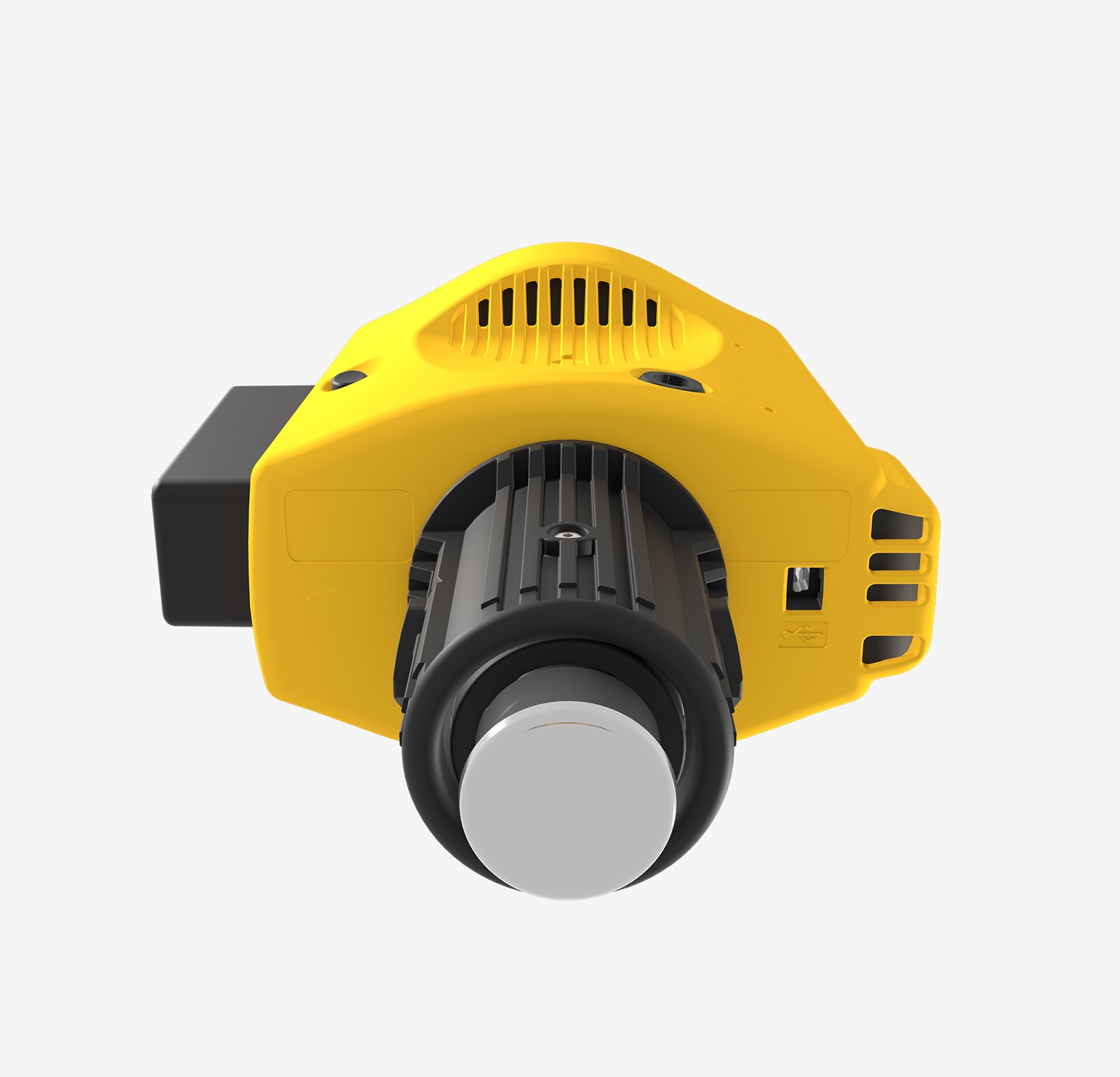
ARM EventView retrieves configuration data and event logs over Bluetooth or USB and builds event summary reports for quality review.
Where it is used
EMS and ambulance services, emergency departments, cath labs and hospital resuscitation teams, for adult patients in cardiac arrest who fit the device.
In the box
ARM XR system with integrated frame and backboard, compression module with suction cup, patient stabilisation straps, carrying case and RBP-1000 battery pack, as shown by Defibtech. The RPM-2000 AC power adapter, spare battery packs and the external battery charging station are confirmed separately. Pack sizes and configurations are confirmed with the quotation.
Clearance & compliance
FDA 510(k) cleared K211289 (9 Nov 2021, RMU-2000 Automated Chest Compression System, product code DRM) · CE marked under EU MDR 2017/745: EU declaration of conformity RAC-1714-EN Rev C (RMU-2000) and RAC-1716-EN (accessories); EUDAMED lists the ARM XR compression module RMC-U2000, suction cup and stabilisation strap as Class IIb, on the market · UK MDR declaration RAC-1714-UK and UKCA certificate 781621 published by Defibtech. Supplied subject to registration in each destination country (MOHAP, DoH, DHA, SFDA or the equivalent authority). Certificates, declarations of conformity, IFUs and registration documents are provided with every quotation. Specifications are indicative and subject to manufacturer change.
Where a country has an official agent or authorised distributor, we source the item through it — or directly from the manufacturer if necessary. Product names, trademarks and images belong to their respective owners.
Questions
Is the ARM XR available in the UAE and the GCC?
KGG sources the Defibtech ARM XR on request for ambulance services, hospitals and emergency departments in the UAE, Saudi Arabia, Qatar, Kuwait, Bahrain and Oman. It is supplied subject to registration in each destination country, and availability is confirmed with each quotation.
How do I get a price?
Add the ARM XR to your quote list or use Request a quote. We reply with pricing, lead time and the documents for your country, and can include spare battery packs, the AC adapter and the external charging station.
Which patients can it treat?
Adults who fit the device: chest width up to 44.4 cm and chest height 18.8–32.3 cm. Defibtech states that use is not restricted by patient weight, and the compression depth adjusts automatically to chest size.
How long does it run?
About one hour of compressions on a new battery pack (nominal patient, 25 °C). It can also run from the RPM-2000 AC adapter, which charges the installed pack in under 3 hours.
How is it different from the original Lifeline ARM?
ARM XR (RMU-2000) is Defibtech's newer model with an integrated frame and backboard, a larger chest-height range, Bluetooth data transfer and a 60-minute battery. The original Lifeline ARM (RMU-1000) uses different dimensions and accessories.
Can it be stored in a hot ambulance?
Defibtech rates standby, storage and transport from −20 to 60 °C and operation from 0 to 40 °C. Allow up to 2 hours to reach operating temperature after storage at extremes, and keep battery packs within 0–40 °C for long-term storage.
Request a quote
Get pricing for the ARM XR.
Tell us the quantity, delivery city and whether you are ordering for a facility, a team or a patient. We reply with pricing, lead time and the regulatory documents for your country.
 English
 العربية