
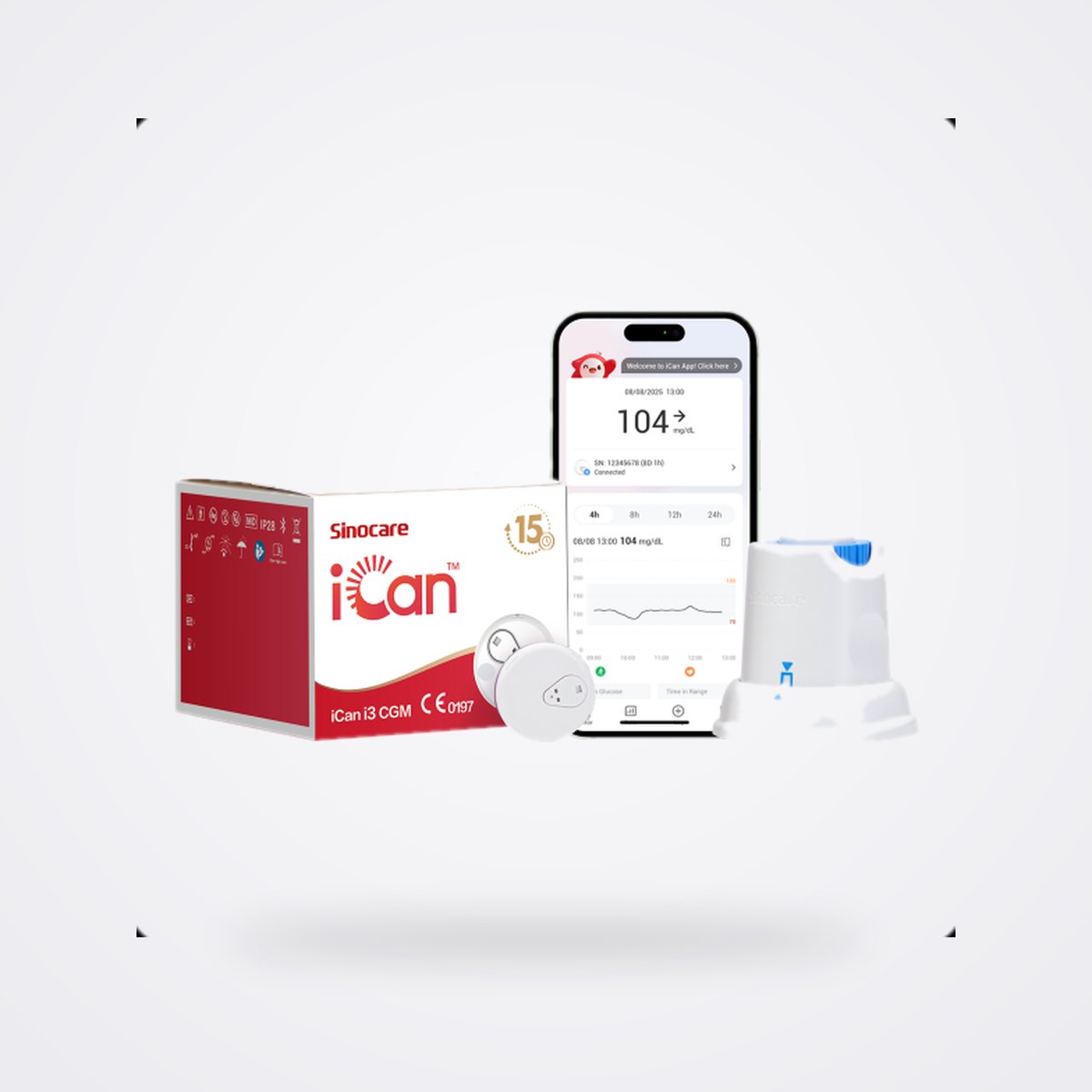
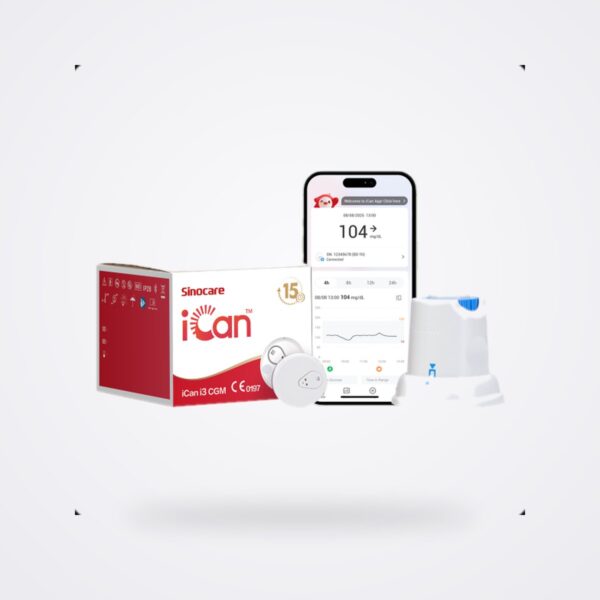
Sinocare iCan
Fifteen days. Every three minutes.
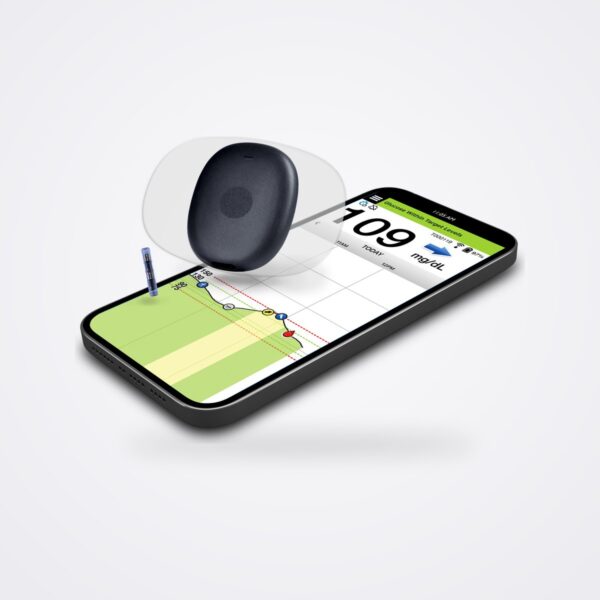
iCan measures glucose in interstitial fluid through a small on-body sensor applied with a one-step applicator, so routine finger pricks are not needed for daily trends. Readings reach the iCan CGM app or the iCan view reader every 3 minutes for up to 15 days, with alerts and trend arrows, and can be shared through the iCan Reach and iCan Review apps. The i6 generation is smaller and lighter than the i3 and is approved for the back of the upper arm from age 13.
Key specifications
Why the iCan CGM
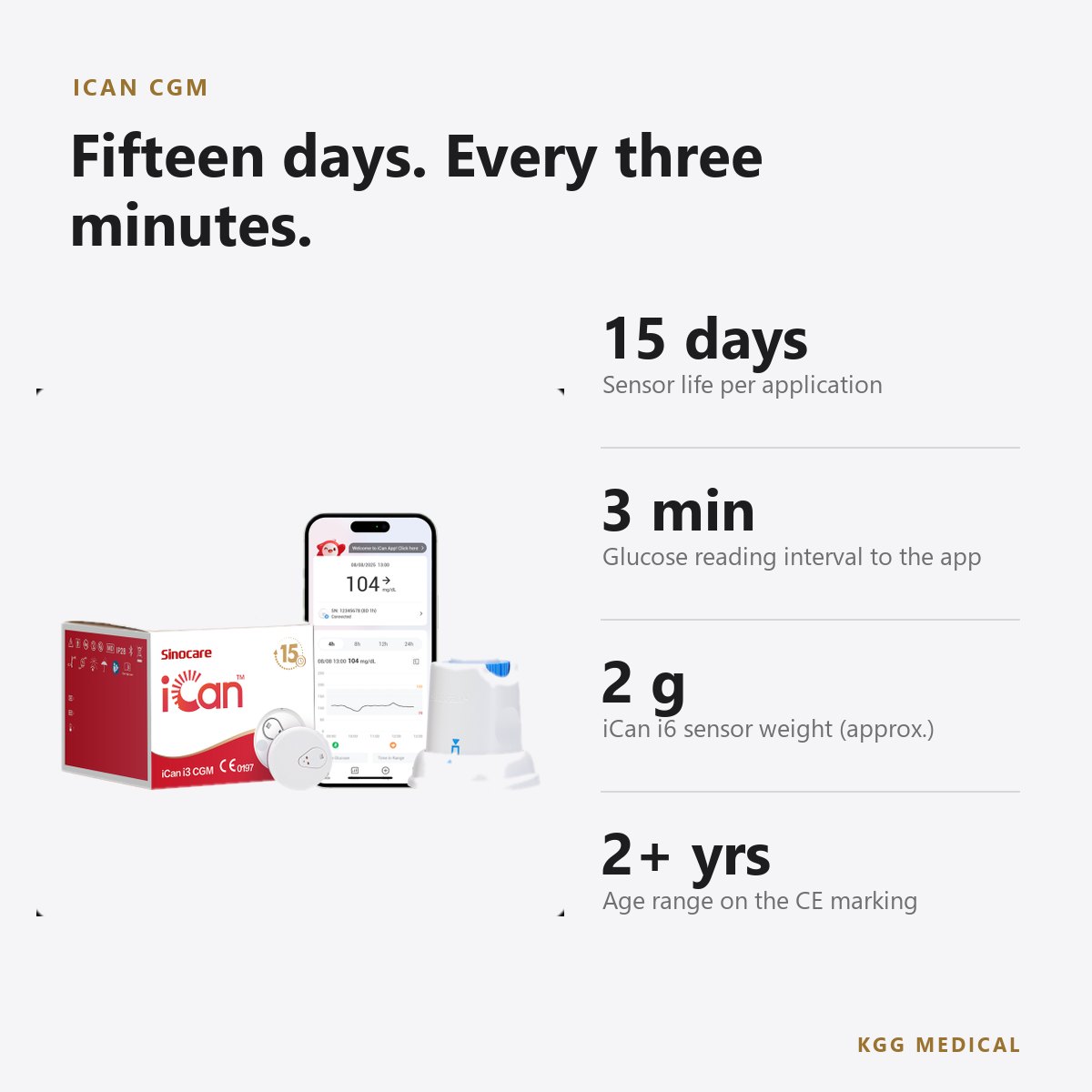
Fifteen-day wear
One sensor covers up to 15 days, with a glucose reading every 3 minutes sent to the phone over Bluetooth.
Smaller i6 sensor
The i6 sensor measures 23.3 × 3.95 mm and weighs about 2 g, and is rated IP28 for showering, bathing and swimming to 2 m for 2 hours.
From age 2
iCan is CE marked for people with diabetes from age 2. Children aged 2–12 wear it on the abdomen; from age 13 the back of the upper arm is also approved.
Alerts and sharing
The app shows trend arrows and high and low alerts, and data can be followed by family through iCan Reach and reviewed by clinicians through iCan Review.
Where it is used
Daily glucose monitoring at home for children and adults with diabetes, prescribed and reviewed through diabetes clinics, endocrinology and paediatric services.
In the box
Each pack contains one iCan sensor pre-loaded in its applicator (sterile) and instructions for use. The iCan view reader is optional. Pack sizes and configurations are confirmed with the quotation.
Clearance & compliance
CE marked under EU MDR 2017/745, Class IIb: EUDAMED Basic UDI-DI 6934175005A0007PZ 'Continuous Glucose Monitoring System', models i3 and o3, trade name Sinocare iCan, on the market; CE 0197 (TÜV Rheinland LGA Products) printed on the iCan i3 pack; Sinocare reports MDR certification by TÜV Rheinland on 2 Jul 2025 covering i6, H6, i7 and H7. Supplied subject to registration in each destination country (MOHAP, DoH, DHA, SFDA or the equivalent authority). Certificates, declarations of conformity, IFUs and registration documents are provided with every quotation. Specifications are indicative and subject to manufacturer change.
Where a country has an official agent or authorised distributor, we source the item through it — or directly from the manufacturer if necessary. Product names, trademarks and images belong to their respective owners.
Questions
Is the iCan CGM available in the UAE and the GCC?
KGG sources iCan i3 and i6 sensors on request for clinics, pharmacies and distributors in the UAE, Saudi Arabia, Qatar, Kuwait, Bahrain and Oman, supplied subject to registration in each destination country. Availability is confirmed with each quotation.
How do I get a price?
Add it to your quote list or use Request a quote. We reply with pricing, lead time and the documents for your country.
What is the difference between the i3 and the i6?
Both last up to 15 days and read every 3 minutes. The i6 sensor is smaller (23.3 × 3.95 mm, about 2 g) than the i3 (32 × 5.7 mm) and is approved for the upper arm from age 13.
Who should not use it?
The i3 labelling says not to use it during pregnancy, on dialysis, with a pacemaker or when critically ill, and to remove it for MRI, CT or diathermy. Follow the IFU for your model.
How should sensors be stored in the Gulf?
Store sensors at 2–30 °C and 10–90% humidity, away from parked cars and freezing. Air-conditioned storage is advisable in summer.
Is it FDA cleared?
No. iCan is CE marked in Europe; Sinocare withdrew its US 510(k) application for the i3 in August 2025.
Request a quote
Get pricing for the iCan CGM.
Tell us the quantity, delivery city and whether you are ordering for a facility, a team or a patient. We reply with pricing, lead time and the regulatory documents for your country.
 English
 العربية