
SAM Medical
Where limb tourniquets can't reach.
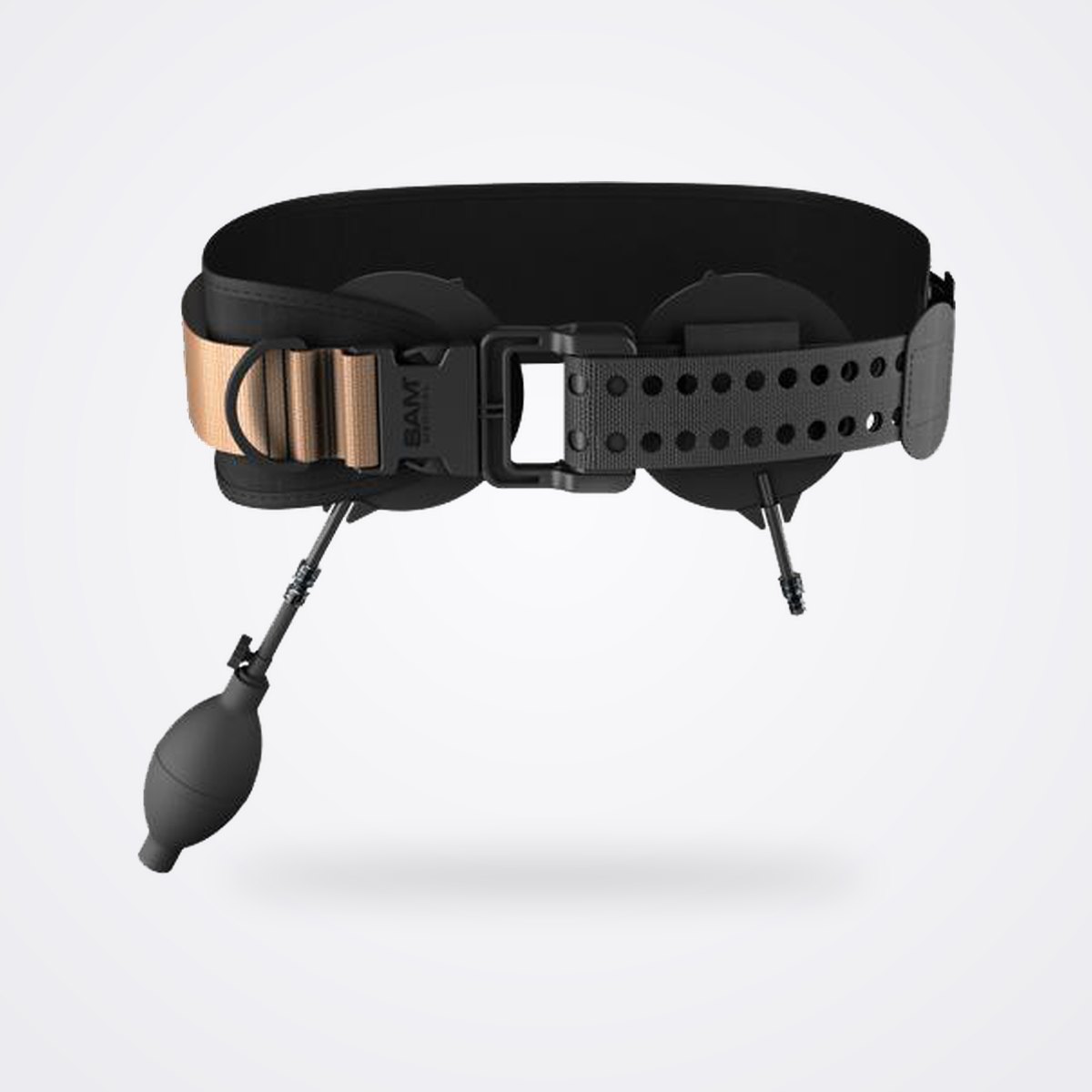
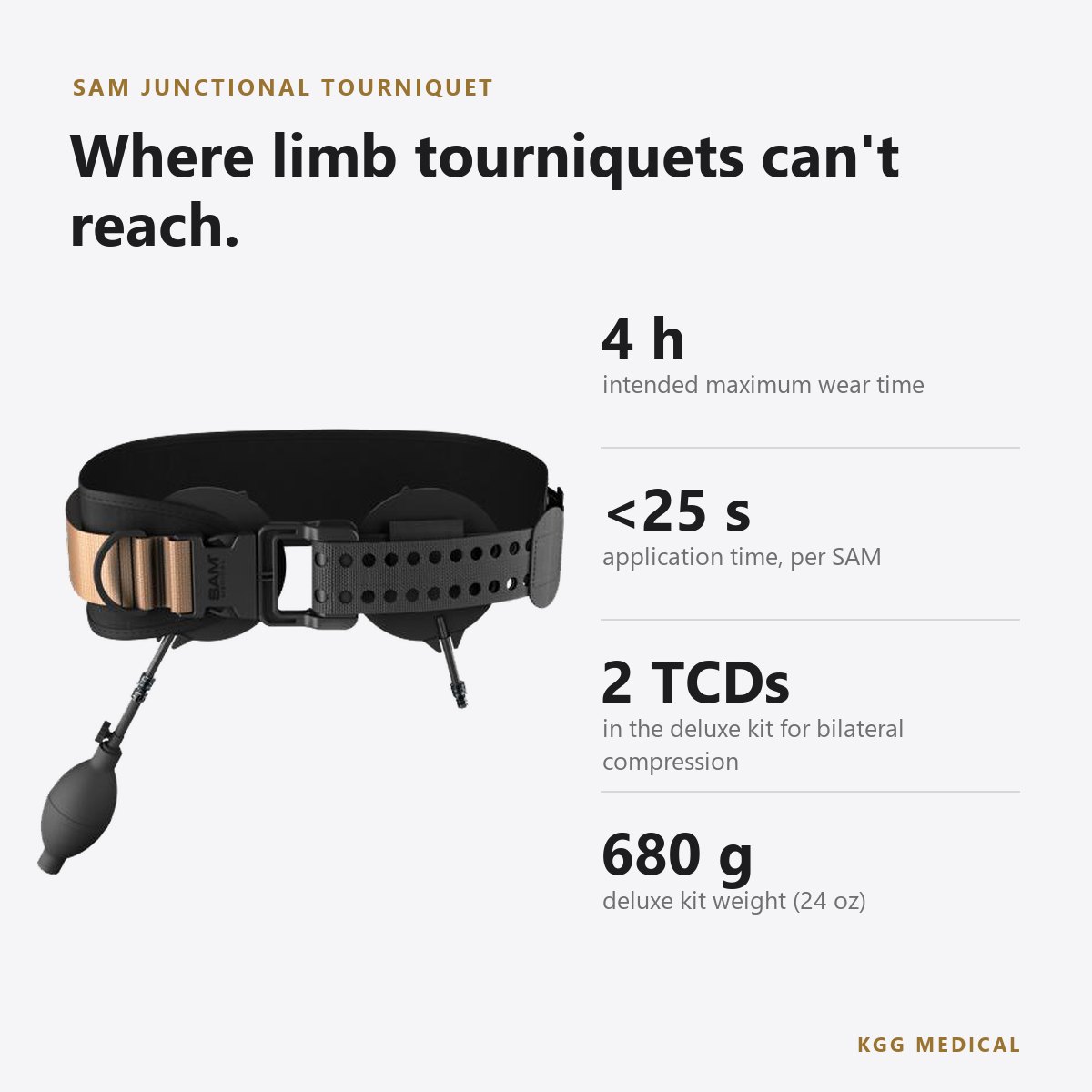
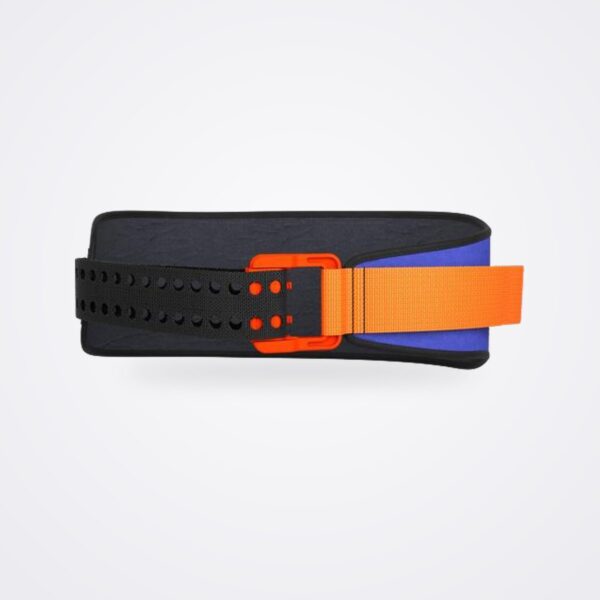
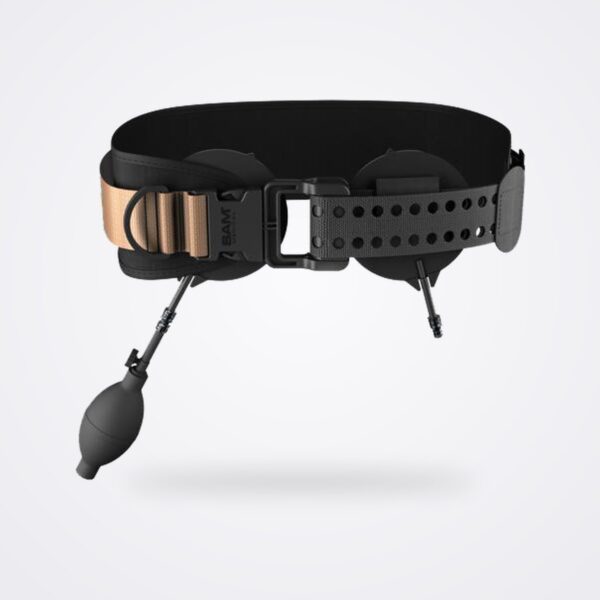
The SAM Junctional Tourniquet (SJT) is intended to control junctional bleeding for up to four hours where standard tourniquets cannot be used. A belt with SAM's AutoStop buckle is placed around the patient, then one or two Target Compression Devices are inflated with the hand pump or any luer-lock syringe until bleeding stops; SAM states it can be applied in under 25 seconds. The same belt immobilises pelvic fractures, and an extender and auxiliary strap allow application at the axilla.
Key specifications
Why the SAM Junctional Tourniquet
Built for the junctions
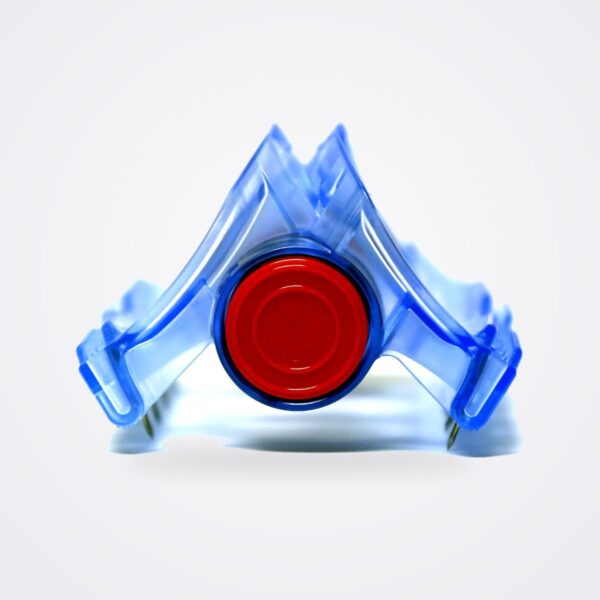
The Target Compression Device presses directly over inguinal or axillary vessels, where a limb tourniquet cannot be placed. A second TCD allows bilateral compression.
Pump or syringe
Inflate with the removable hand pump or any luer-lock syringe. At altitude, the IFU allows filling the TCD with water or saline instead of air.
Reaches the armpit
The TCD extender and auxiliary strap set the SJT up in a harness-style configuration for upper junctional and axillary wounds.
Also a pelvic binder
Used without the TCD, the belt and AutoStop buckle immobilise a pelvic fracture at the same 150 N force as SAM's pelvic sling.
Where it is used
Military and tactical medicine, air and ground ambulance services, trauma centres and emergency departments.
In the box
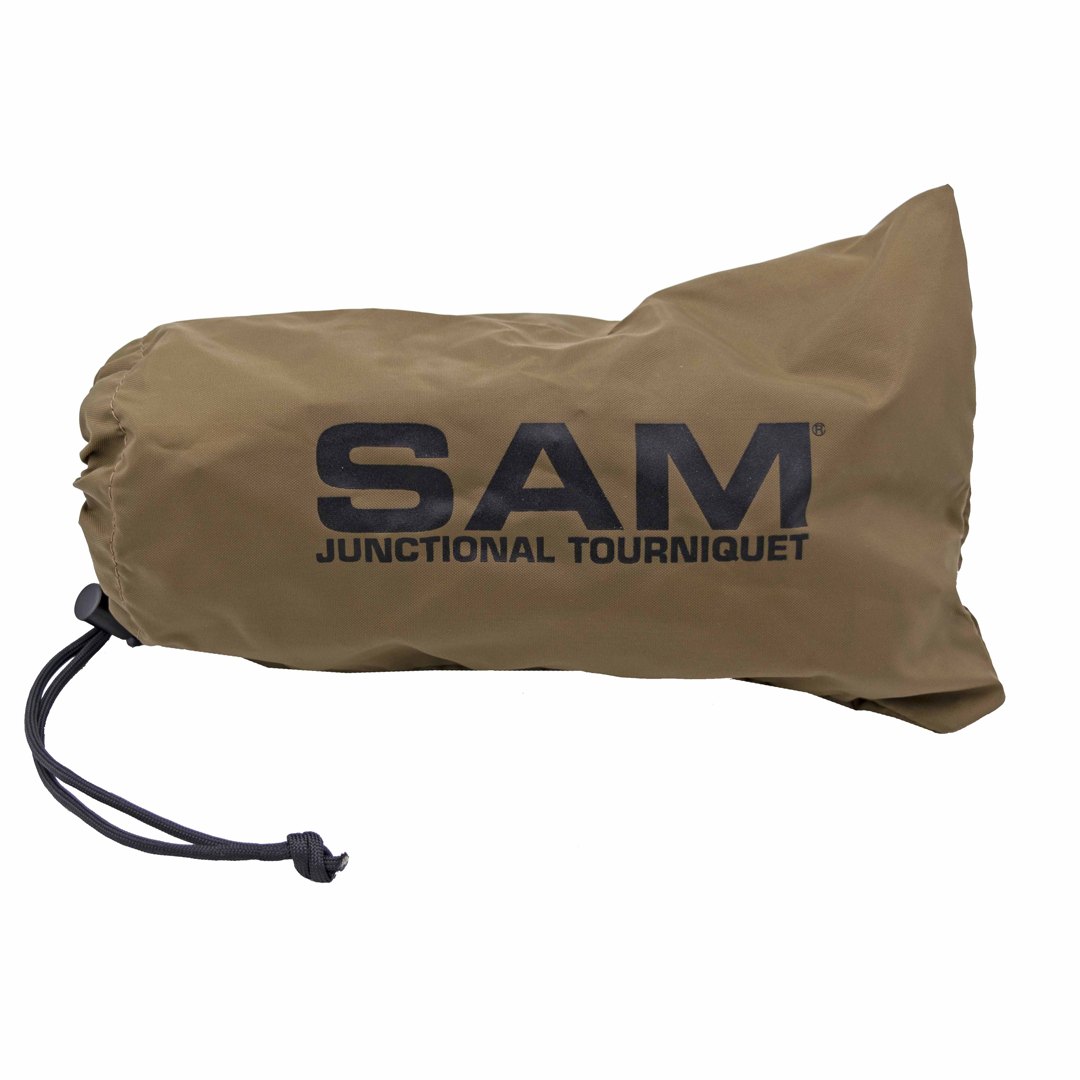
JT400-EN: SJT belt, two Target Compression Devices, TCD extender, hand pump and auxiliary strap in a durable pouch. JT401-EN: belt, one TCD and hand pump. Pack sizes and configurations are confirmed with the quotation.
Clearance & compliance
FDA 510(k) cleared (K123694; K131561), Class II · CE marked (IFU symbol glossary; EU, UK and Swiss authorised representatives listed) · Prescription only in the USA. Supplied subject to registration in each destination country (MOHAP, DoH, DHA, SFDA or the equivalent authority). Certificates, declarations of conformity, IFUs and registration documents are provided with every quotation. Specifications are indicative and subject to manufacturer change.
Where a country has an official agent or authorised distributor, we source the item through it — or directly from the manufacturer if necessary. Product names, trademarks and images belong to their respective owners.
Questions
Is the SAM Junctional Tourniquet available in the UAE and the GCC?
KGG sources the SAM Junctional Tourniquet on request for defence medical units, ambulance services and hospitals in the UAE, Saudi Arabia, Qatar, Kuwait, Bahrain and Oman. It is supplied subject to registration in each destination country, and availability is confirmed with each quotation.
How do I get a price?
Add the SAM Junctional Tourniquet to your quote list or use Request a quote. We reply with pricing, lead time and the documents available for your country.
How long can it stay on?
The IFU states it is intended to control junctional bleeding for up to four hours. When used as a pelvic sling for longer periods, the patient's skin should be monitored.
Does altitude affect it?
Air in the TCD expands and contracts with altitude, so extra pumping may be needed. The IFU allows filling the TCD with water, saline or another non-compressible fluid by syringe if altitude change is a concern.
Is there a training version?
Yes. SAM sells a trainer, JT402-EN, so teams can practise without using operational stock.
How is it different from the AAJT-S?
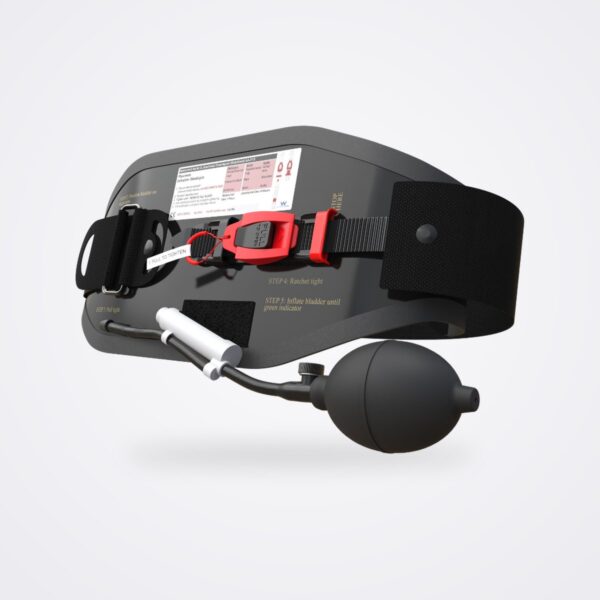
The SJT uses cone-shaped Target Compression Devices on a belt with SAM's AutoStop buckle. The AAJT-S uses a wedge-shaped bladder with a ratchet strap and is also cleared for use over the lower abdomen.
Request a quote
Get pricing for the SAM Junctional Tourniquet.
Tell us the quantity, delivery city and whether you are ordering for a facility, a team or a patient. We reply with pricing, lead time and the regulatory documents for your country.
 English
 العربية