
Compression Works
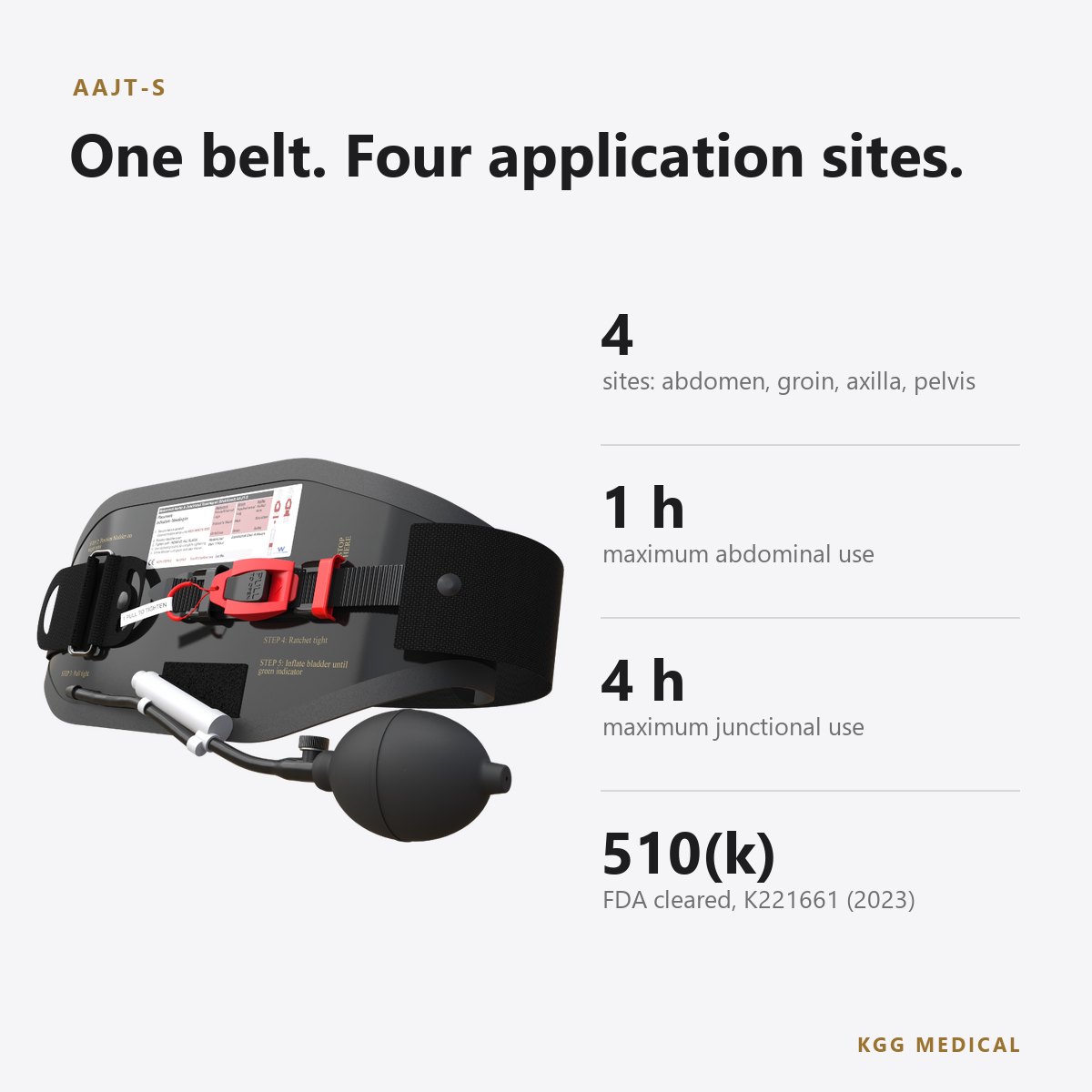
One belt. Four application sites.
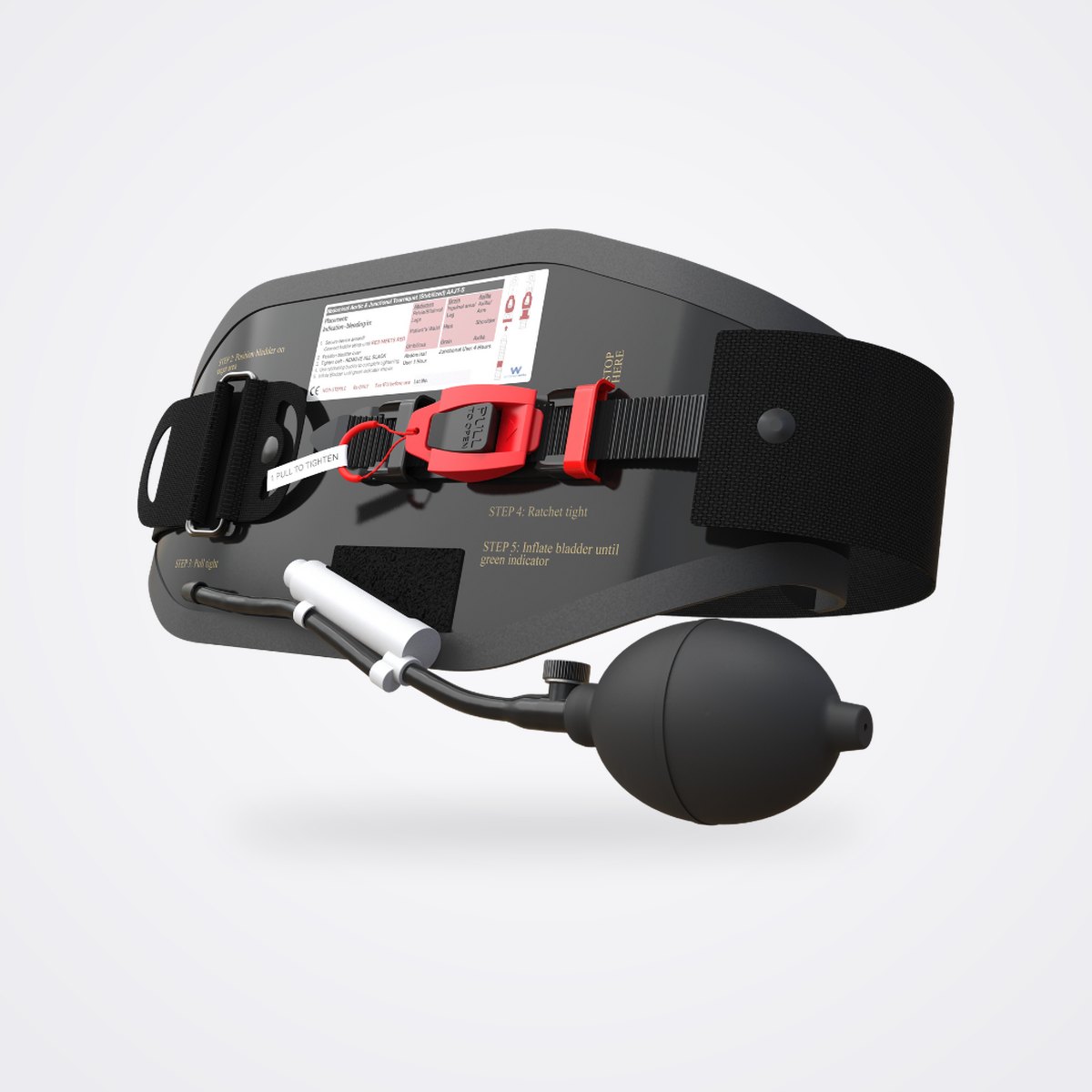
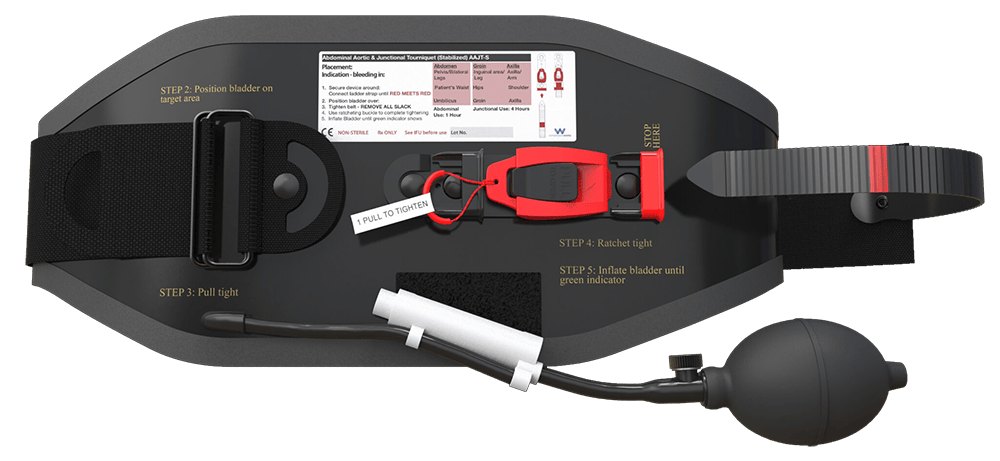
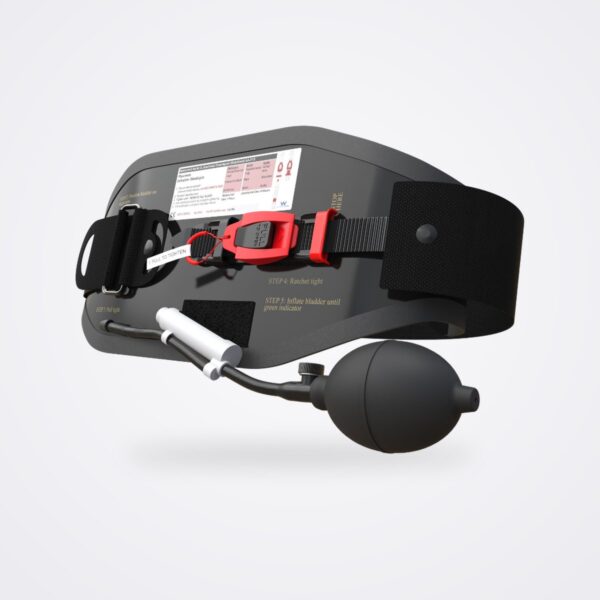
The AAJT-S is a belt carrying a wedge-shaped bladder that, once inflated over the target area, compresses the structures beneath it. Over the lower abdomen it compresses the descending aorta to control bleeding in the pelvis; it is also applied over the inguinal region or the axilla, and tightened without inflation to stabilise a pelvic fracture. A ladder strap and ratcheting buckle allow one-handed tightening, and the bladder is inflated until the gauge shows green. FDA clearance covers up to 1 hour of abdominal use and up to 4 hours of junctional use.
Key specifications
Why the AAJT-S
Four sites, one device
The same AAJT-S is used over the lower abdomen, the groin or the armpit, and as a pelvic binder, so one device covers several hard-to-control bleeding sites.
Tightened with one hand
Connect red to red, pull out the slack, then ratchet. The ladder strap replaced the earlier windlass so the belt can be tightened one-handed.
Green means ready
An integrated gauge with built-in pressure regulation shows green when the bladder has reached its working inflation.
Backed by research
Compression Works cites more than 70 peer-reviewed publications and use in more than 20 countries, including military and civilian research on aortic compression.
Where it is used
Military and tactical medicine, ground and air EMS, emergency departments and trauma centres.
In the box
One AAJT-S device: belt with wedge-shaped bladder, ladder strap with ratcheting buckle, and inflation bulb with pressure gauge, as pictured by the maker. Pack sizes and configurations are confirmed with the quotation.
Clearance & compliance
FDA 510(k) cleared (K221661, 3 Mar 2023), Class II, 21 CFR 870.4450 · CE marking for the AAJT-S not stated (the Compression Works timeline cites a 2011 CE mark for the earlier AAT). Supplied subject to registration in each destination country (MOHAP, DoH, DHA, SFDA or the equivalent authority). Certificates, declarations of conformity, IFUs and registration documents are provided with every quotation. Specifications are indicative and subject to manufacturer change.
Where a country has an official agent or authorised distributor, we source the item through it — or directly from the manufacturer if necessary. Product names, trademarks and images belong to their respective owners.
Questions
Is the AAJT-S available in the UAE and the GCC?
KGG sources the AAJT-S on request for defence medical units, ambulance services and hospitals in the UAE, Saudi Arabia, Qatar, Kuwait, Bahrain and Oman. It is supplied subject to registration in each destination country, and availability is confirmed with each quotation.
How do I get a price?
Add the AAJT-S to your quote list or use Request a quote. We reply with pricing, lead time and the documents available for your country.
How long can it stay on?
Under its FDA clearance, the AAJT-S is intended to control bleeding for up to 1 hour when used on the abdomen and up to 4 hours at junctional sites, until the patient reaches a healthcare facility.
How is it removed?
Deflate the bladder slowly, lift and release the black pull tab, then remove the ladder strap. Compression Works prints 'Do not cut' on its guide because premature removal may lead to resumed bleeding.
What changed from the original AAJT?
According to the 510(k) summary, the AAJT-S swaps the windlass for a ladder strap and ratcheting buckle, moves tightening to the front, adds a 'D' handle and a wider belt, and adds the pelvic stabilisation indication.
Is training available?
Yes. Compression Works publishes an application guide, training protocol and train-the-trainer material. We can share these with the quotation.
Request a quote
Get pricing for the AAJT-S.
Tell us the quantity, delivery city and whether you are ordering for a facility, a team or a patient. We reply with pricing, lead time and the regulatory documents for your country.
 English
 العربية