
iCare
Macular function, mapped.
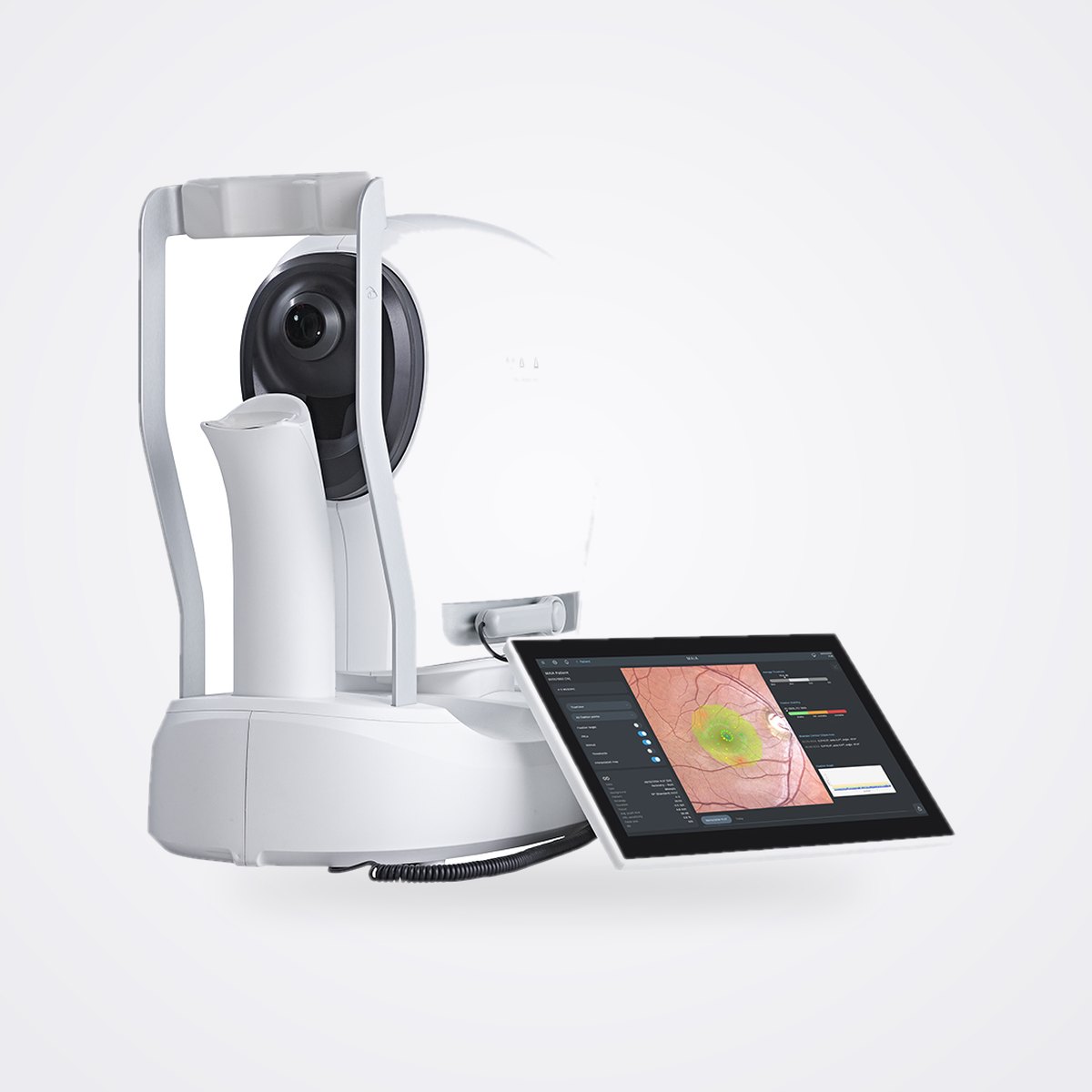
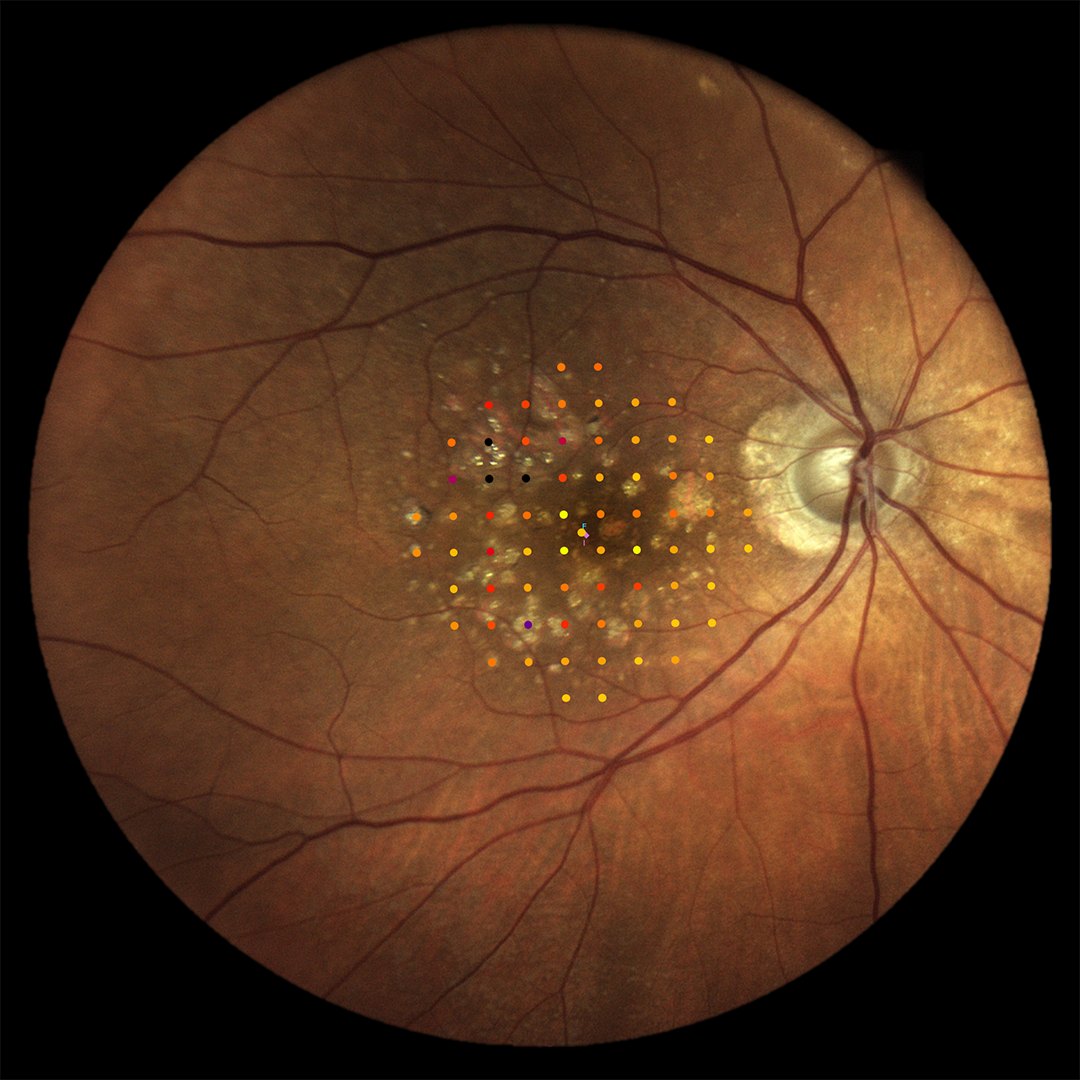
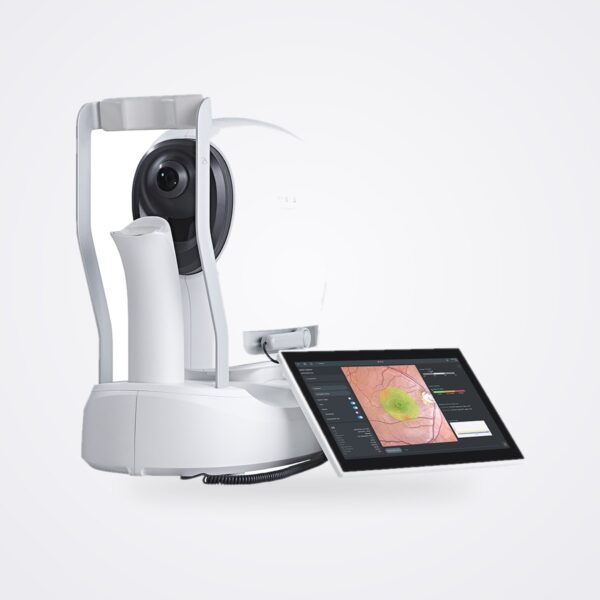
The iCare MAIA tests retinal sensitivity point by point across the macula while a scanning LED ophthalmoscope tracks the eye 25 times a second, so every stimulus lands where it was intended even when fixation is poor. Results sit on 60° TrueColor and infrared confocal images, with fixation stability, preferred retinal locus and interpolated sensitivity maps. Follow-up exams register anatomically to the baseline, including baselines from the previous MAIA generation. The new model adds auto-alignment and a 15-inch touchscreen for easier operation.
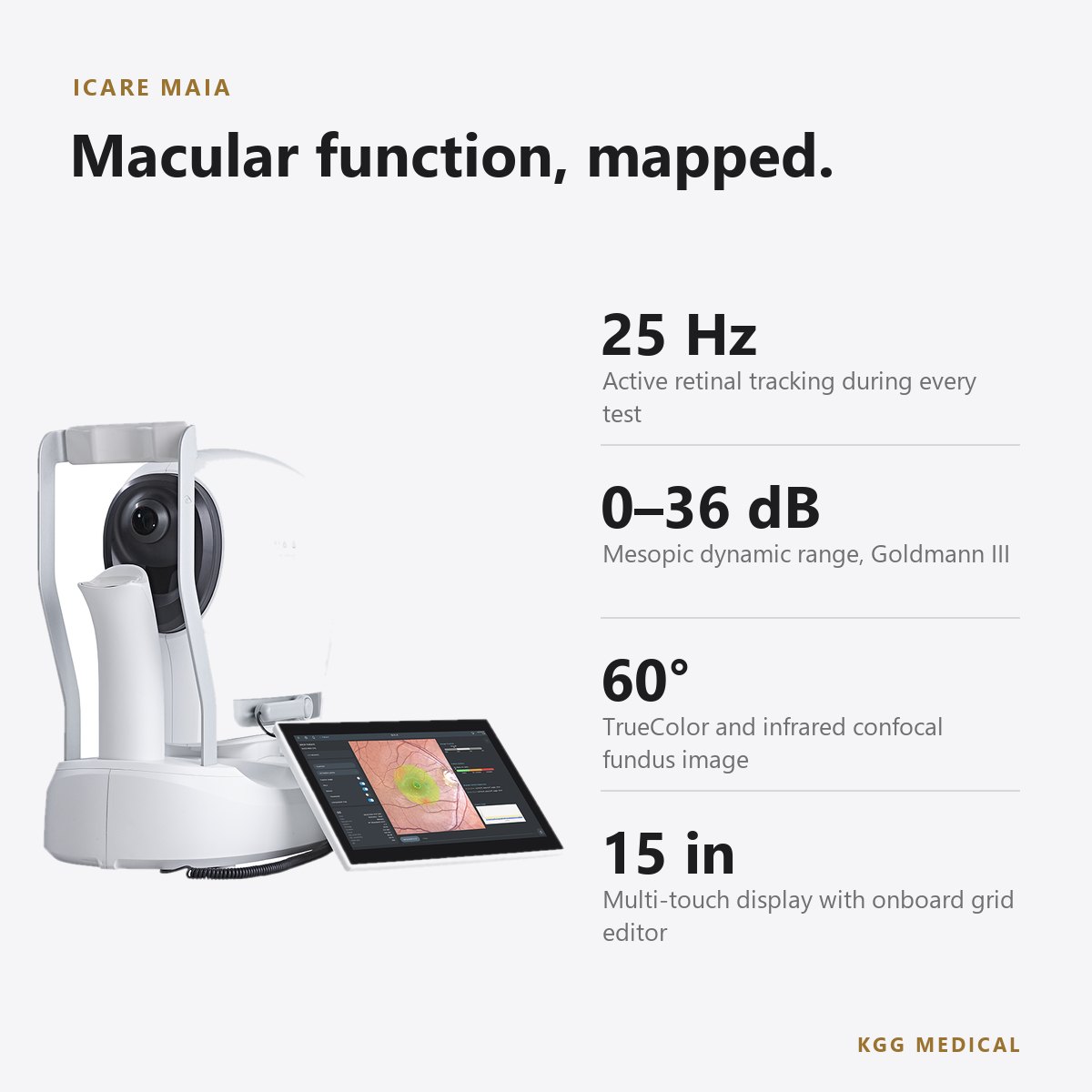
Key specifications
Why the iCare MAIA
Sensitivity where it matters
MAIA projects stimuli onto chosen points of the macula and records what the patient sees, revealing scotomata and subtle sensitivity loss even when visual acuity is near normal.
Tracked at 25 Hz
The scanning LED ophthalmoscope follows eye movements in real time and corrects each stimulus position, which matters for patients with unstable or eccentric fixation.
Structure meets function
Results are overlaid on 60° TrueColor and infrared confocal images, with interpolated colour maps, fixation plots, BCEA indices and the preferred retinal locus.
Follow-up you can trust
Follow-up exams register to the baseline and retest the same retinal locations, including baselines from the previous MAIA generation, which iCare reports as fully interchangeable.
Easier third generation
Auto-alignment, auto-focus, a 15-inch touchscreen and an onboard grid editor simplify operation; Remote Exam and the Open Perimetry Interface support research protocols.
Where it is used
Retina clinics and hospital ophthalmology departments, pre-surgical macular assessment, unexplained vision loss, and research centres and pharmaceutical studies in AMD, geographic atrophy, Stargardt disease and retinitis pigmentosa.
In the box
iCare MAIA device with embedded 15-inch display, headrest, chinrest, patient push-button and external power supply, as listed in the 510(k) device description. Remote Viewer, Remote Exam and OPI are optional software. Instrument table and configuration are confirmed with the quotation.
Clearance & compliance
FDA 510(k) cleared K243504 (17 Mar 2025, MAIA model AHMACME001); 21 CFR 886.1570, Class II, product code MYC; indicated for taking digital images of a human retina without the use of a mydriatic agent; the automatic perimetry function is described in the 510(k) summary as 510(k)-exempt (product code HPT) · CE marked during Q1 2025 (Revenio Q1 2025 interim report); CE 0123 on brochure REV12. Supplied subject to registration in each destination country (MOHAP, DoH, DHA, SFDA or the equivalent authority). Certificates, declarations of conformity, IFUs and registration documents are provided with every quotation. Specifications are indicative and subject to manufacturer change.
Where a country has an official agent or authorised distributor, we source the item through it — or directly from the manufacturer if necessary. Product names, trademarks and images belong to their respective owners.
Questions
Is the iCare MAIA available in the UAE and the GCC?
KGG sources the iCare MAIA and its software options on request for hospitals, retina clinics and research centres in the UAE, Saudi Arabia, Qatar, Kuwait, Bahrain and Oman, supplied subject to registration in each destination country. Availability is confirmed with each quotation.
How do I get a price?
Add it to your quote list or use Request a quote. We reply with pricing, lead time and the documents for your country, and can include Remote Viewer, Remote Exam and OPI options.
What is new compared with the previous MAIA?
The 2025 MAIA has a renewed hardware platform with auto-alignment, a 15-inch touchscreen and 60° TrueColor and infrared confocal imaging. iCare reports full interchangeability of results and data with the previous generation for follow-up.
How is microperimetry different from a standard visual field test?
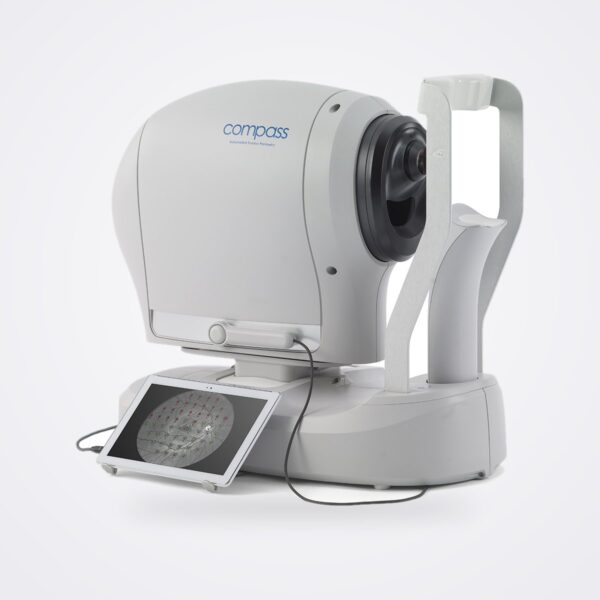
MAIA tests the macula with dense grids such as 10° and 10-2 on a dim (4 asb) background, with retinal tracking and a fundus image for each point. Perimeters such as the iCare COMPASS use wider 24-2 and 30-2 grids on a brighter background, mainly for glaucoma.
Do patients need dilating drops?
No. MAIA is non-mydriatic down to a 3 mm pupil and indicates pupil size automatically. Patients respond with a push-button, and the tracker compensates for eye movements.
What does it need for installation?
MAIA is a 27 kg tabletop unit (360 × 590 × 620 mm) with an embedded 15-inch display, mains power at 100–240 V and Ethernet or Wi-Fi. Results export to USB or a shared network folder.
Request a quote
Get pricing for the iCare MAIA.
Tell us the quantity, delivery city and whether you are ordering for a facility, a team or a patient. We reply with pricing, lead time and the regulatory documents for your country.
 English
 العربية