
Defibtech
Turn it on. It does the rest.
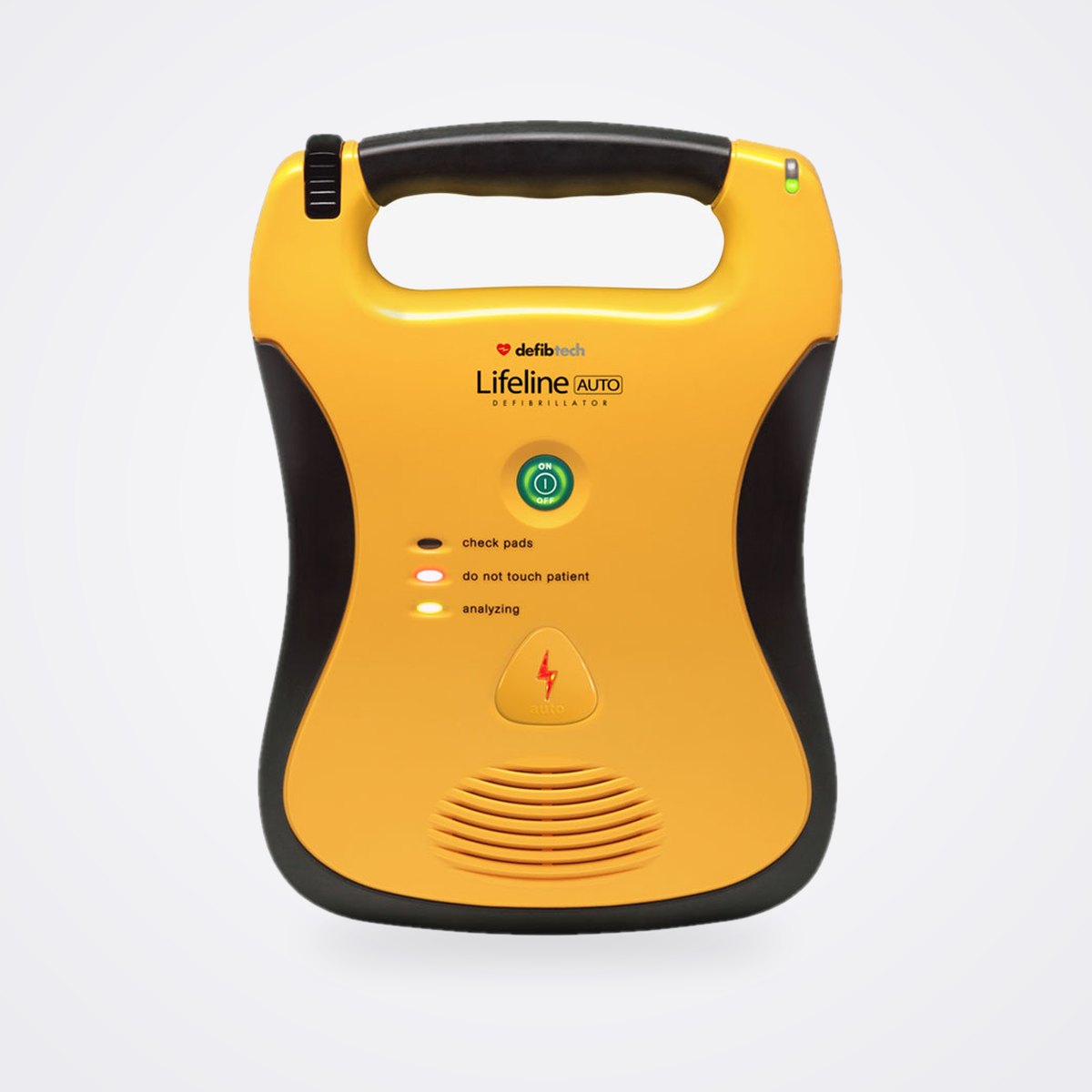
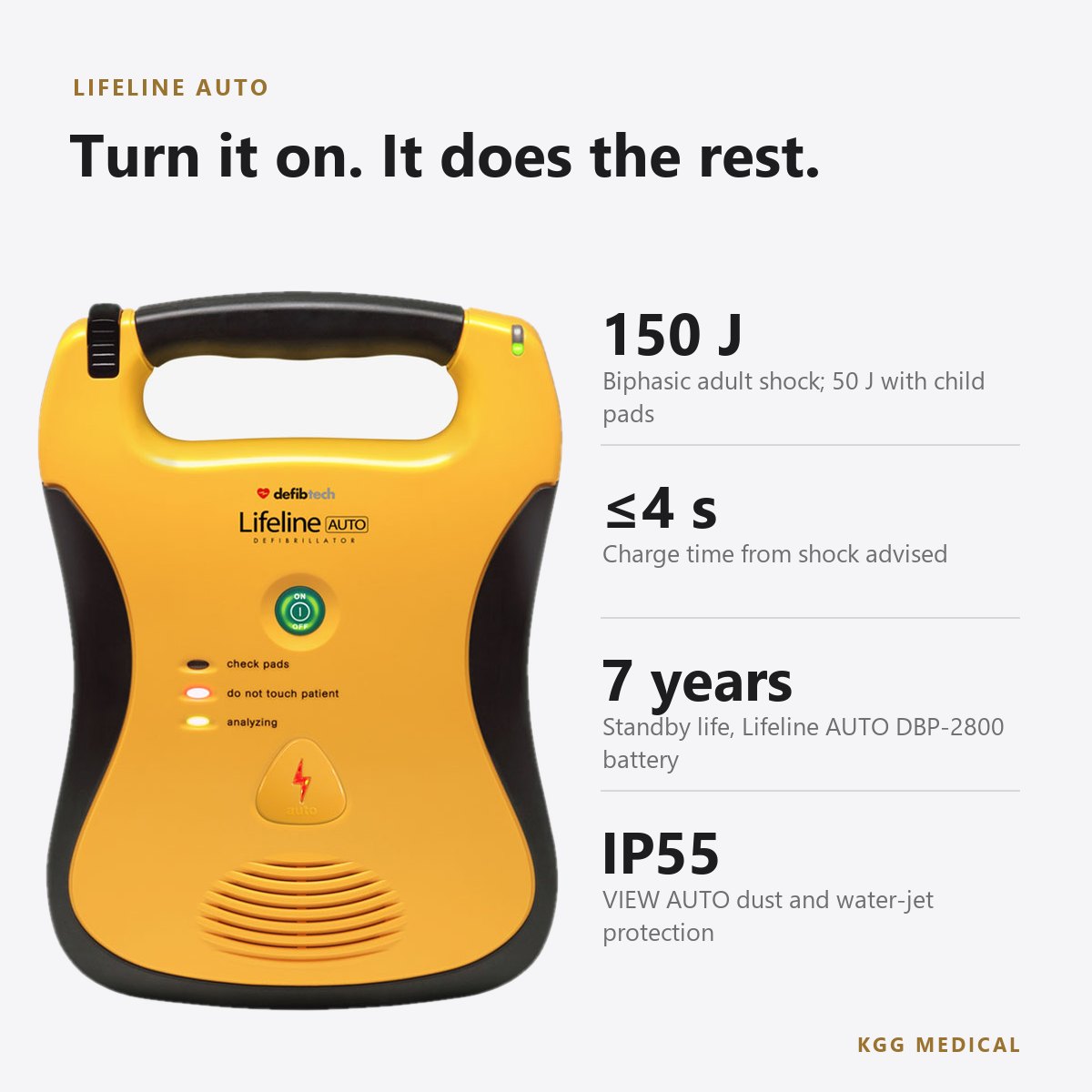
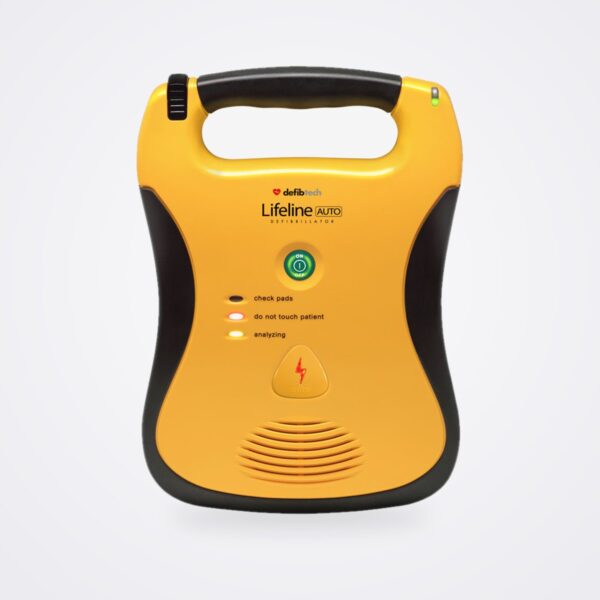
Lifeline AUTO and Lifeline VIEW AUTO analyse the patient's heart rhythm and, if a shock is advised, deliver it automatically after a spoken warning, so the rescuer never has to press a shock button. Both use an impedance-compensated biphasic waveform at 150 J for adults and 50 J with child/infant pads. Lifeline AUTO guides with voice prompts and lights; VIEW AUTO adds a colour screen with full-motion CPR and pad-placement videos. Daily self-tests and a status indicator show readiness at a glance.
Key specifications
Why the Lifeline AUTO
No shock button
After analysis, the AED warns everyone to stand clear and delivers the shock itself, which removes hesitation for untrained or anxious rescuers.
Video that coaches
Lifeline VIEW AUTO shows full-motion colour videos for pad placement, compressions and rescue breaths, with on-screen text and voice in step.
Adult and child energy
150 J for adults and 50 J through child/infant pads, using an impedance-compensated biphasic waveform.
Ready, and it shows
Automatic daily to quarterly self-tests and a lit status indicator show readiness; VIEW AUTO also reports battery and pad expiry on its status screen.
Built to be carried
Rubberised, lid-free housings rated IP54 or IP55, drop and vibration tested to military standards, and tested for helicopters and jet aircraft.
Where it is used
Offices, schools, airports and aircraft, transport, malls, factories, sports venues, marine vessels, emergency vehicles and healthcare facilities.
In the box
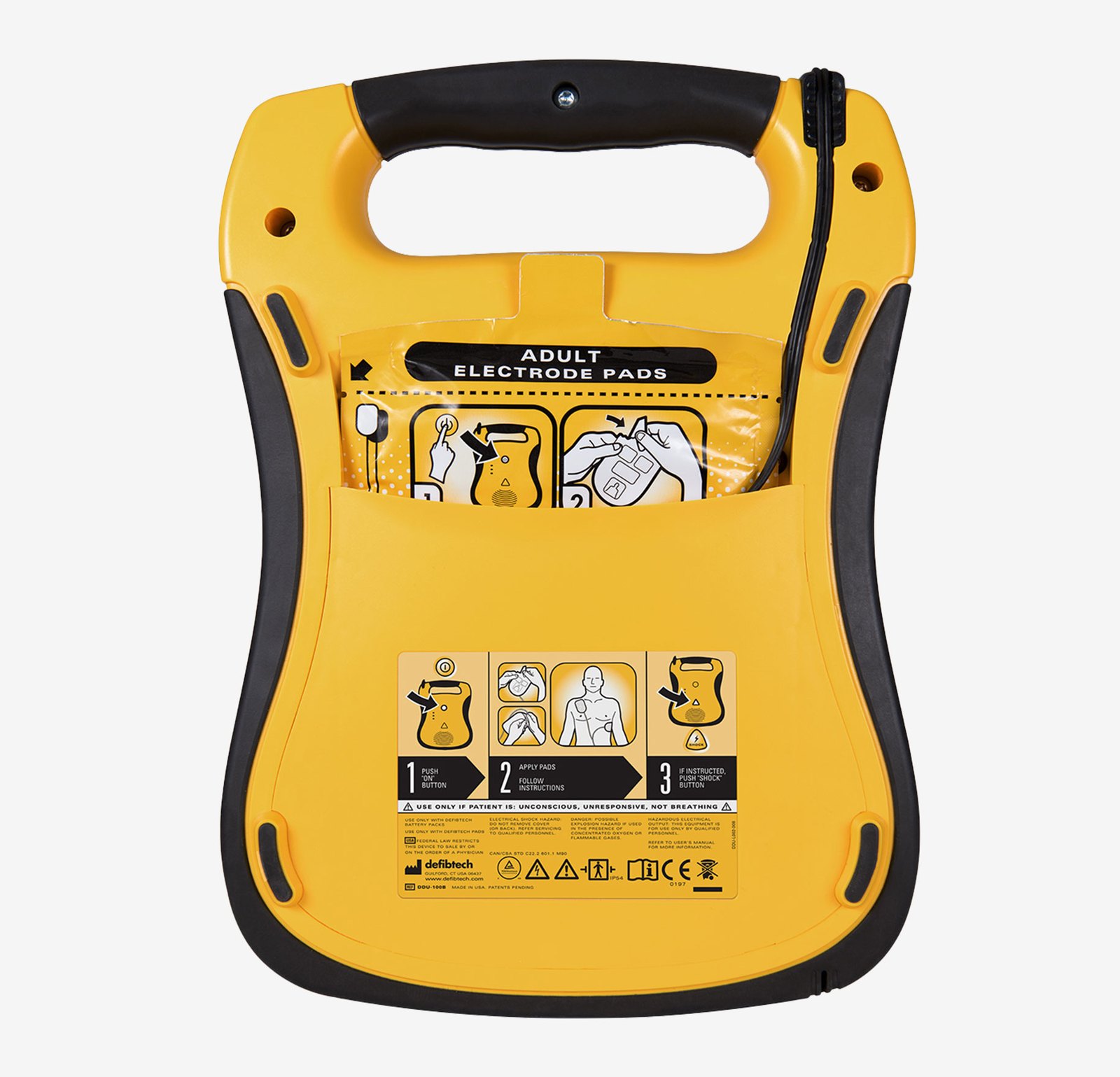
AED with battery pack and one set of adult defibrillation pads, as configured by Defibtech; child/infant pads, data card, carry case, wall cabinet and trainer are optional. Battery and pad models differ between Lifeline AUTO (DDP-100/DDP-200P) and VIEW AUTO (DDP-2001/DDP-2002). Pack sizes and configurations are confirmed with the quotation.
Clearance & compliance
FDA PMA approved P160032 (1 Feb 2018) for Defibtech AEDs including Lifeline/ReviveR AUTO DDU-120 and Lifeline/ReviveR VIEW AUTO, product code MKJ; supplements to S017 (2026) · CE marked under EU MDR 2017/745: AED main units Class III (Rule 22), pads and batteries Class IIb; EU declarations DAC-714-EN Rev C (DDU-120) and DAC-2716-EN Rev B (DDU-2200); BSI notified body 2797, technical documentation certificate MDR 781624 · UK MDR declarations DAC-714-UK and DAC-2716-UK with UKCA certificate 781621. Supplied subject to registration in each destination country (MOHAP, DoH, DHA, SFDA or the equivalent authority). Certificates, declarations of conformity, IFUs and registration documents are provided with every quotation. Specifications are indicative and subject to manufacturer change.
Where a country has an official agent or authorised distributor, we source the item through it — or directly from the manufacturer if necessary. Product names, trademarks and images belong to their respective owners.
Questions
Is the Lifeline AUTO available in the UAE and the GCC?
KGG sources the Lifeline AUTO and Lifeline VIEW AUTO on request for companies, schools, venues, transport operators and healthcare facilities in the UAE, Saudi Arabia, Qatar, Kuwait, Bahrain and Oman. They are supplied subject to registration in each destination country, and availability is confirmed with each quotation.
How do I get a price?
Add the Lifeline AUTO to your quote list or use Request a quote. We reply with pricing, lead time and the documents for your country, and can include spare pads, batteries, child/infant pads and cabinets.
Fully automatic or semi-automatic: which should we choose?
A fully automatic AED delivers the shock itself after analysis, so the rescuer never presses a button. A semi-automatic model, such as the Lifeline or Lifeline VIEW, asks the rescuer to press the shock button. Choose according to local protocol and who will respond.
What is the difference between Lifeline AUTO and VIEW AUTO?
Lifeline AUTO (DDU-120) guides with voice and lights and takes a 5- or 7-year battery. VIEW AUTO (DDU-2200) is smaller and lighter, with a colour screen showing CPR and pad-placement videos, a status screen and a 4-year battery. Pads and batteries are not interchangeable.
Can it be used on children?
Yes. Defibtech specifies child/infant pads for patients under 8 years or under 25 kg, which reduce the energy to 50 J. If child pads are not available, Defibtech says to use adult pads in the child position rather than delay therapy.
Can it stay in a hot car or outdoor cabinet in the Gulf?
Defibtech rates operation and standby from 0 to 50 °C. Parked cars and unshaded cabinets in the Gulf summer can exceed this, so use a temperature-controlled cabinet or indoor location and check the status indicator regularly.
Request a quote
Get pricing for the Lifeline AUTO.
Tell us the quantity, delivery city and whether you are ordering for a facility, a team or a patient. We reply with pricing, lead time and the regulatory documents for your country.
 English
 العربية