
North American Rescue
Decompression in your pocket.
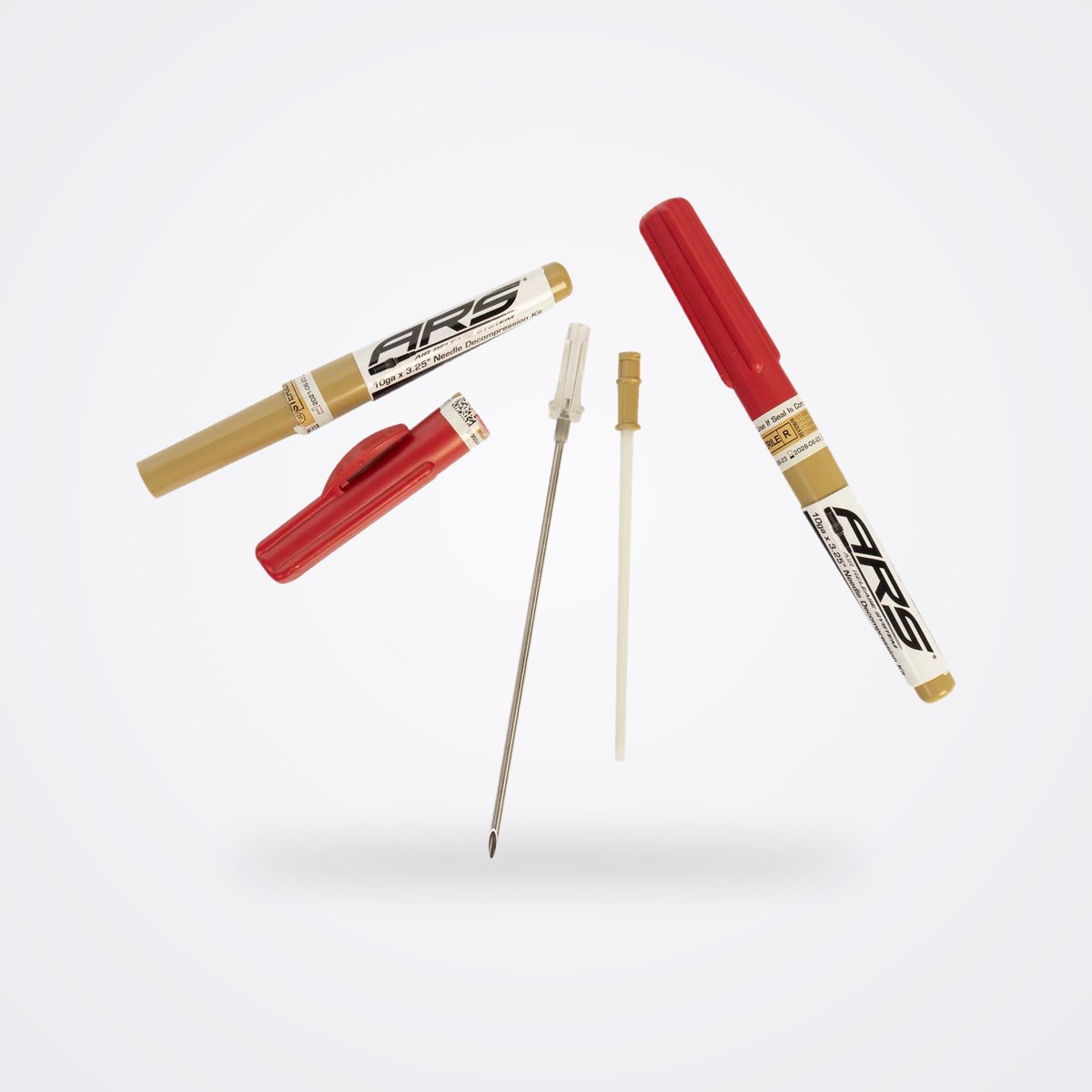
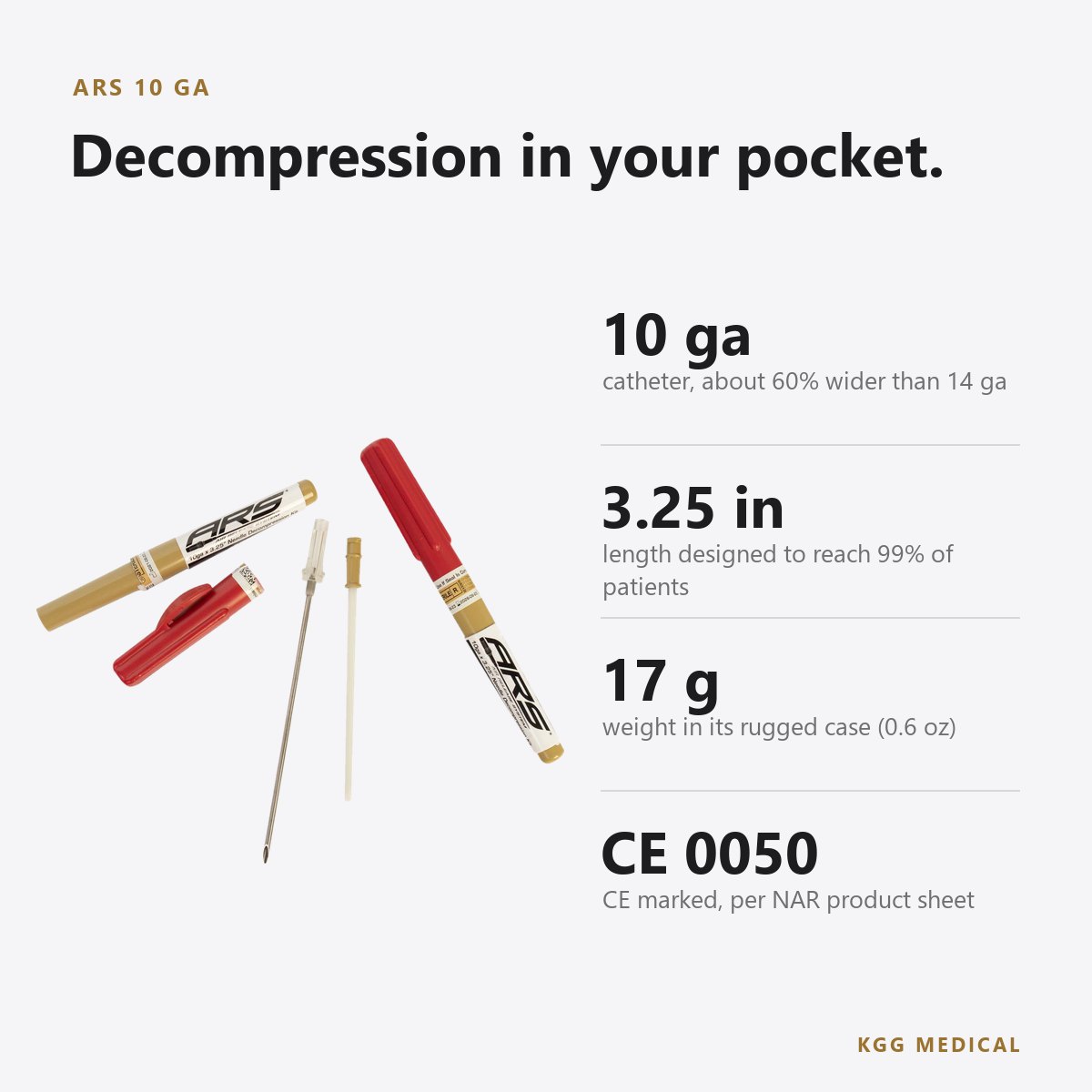
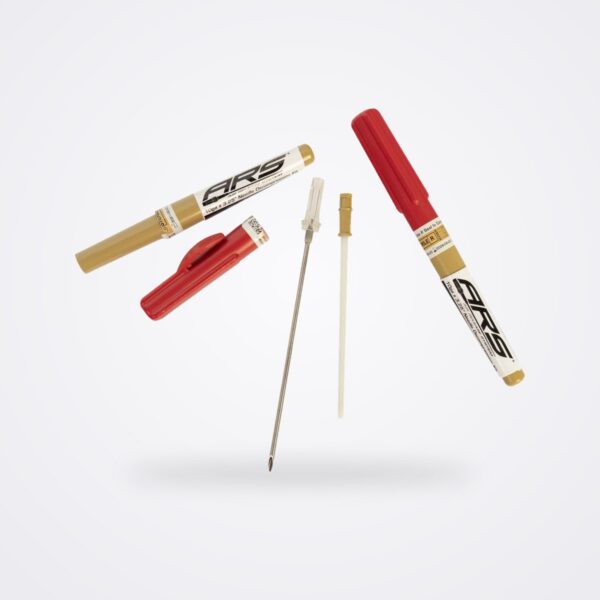
The ARS (Air Release System) is intended to be inserted into the pleural space for emergency relief and temporary management of tension pneumothorax. Its 3.25-inch length is designed to reach the pleural space in 99% of patients, and the 10-gauge catheter is about 60% larger in diameter than the 14-gauge version. A capless flash chamber gives immediate confirmation of placement, and a brown sterility band and hub identify the 10-gauge model at a glance.
Key specifications
Why the ARS 10 ga
Long enough to reach
The 3.25-inch needle and catheter is designed to reach the pleural space in 99% of patients, the problem shorter cannulas run into on muscular or heavily built casualties.
A wider bore
The 10-gauge catheter is roughly 60% larger in diameter than the 14-gauge ARS, giving a larger path for air to escape.
See the flash
The flash chamber has no cap, so placement can be confirmed immediately once the needle enters the pleural space.
Protected until needed
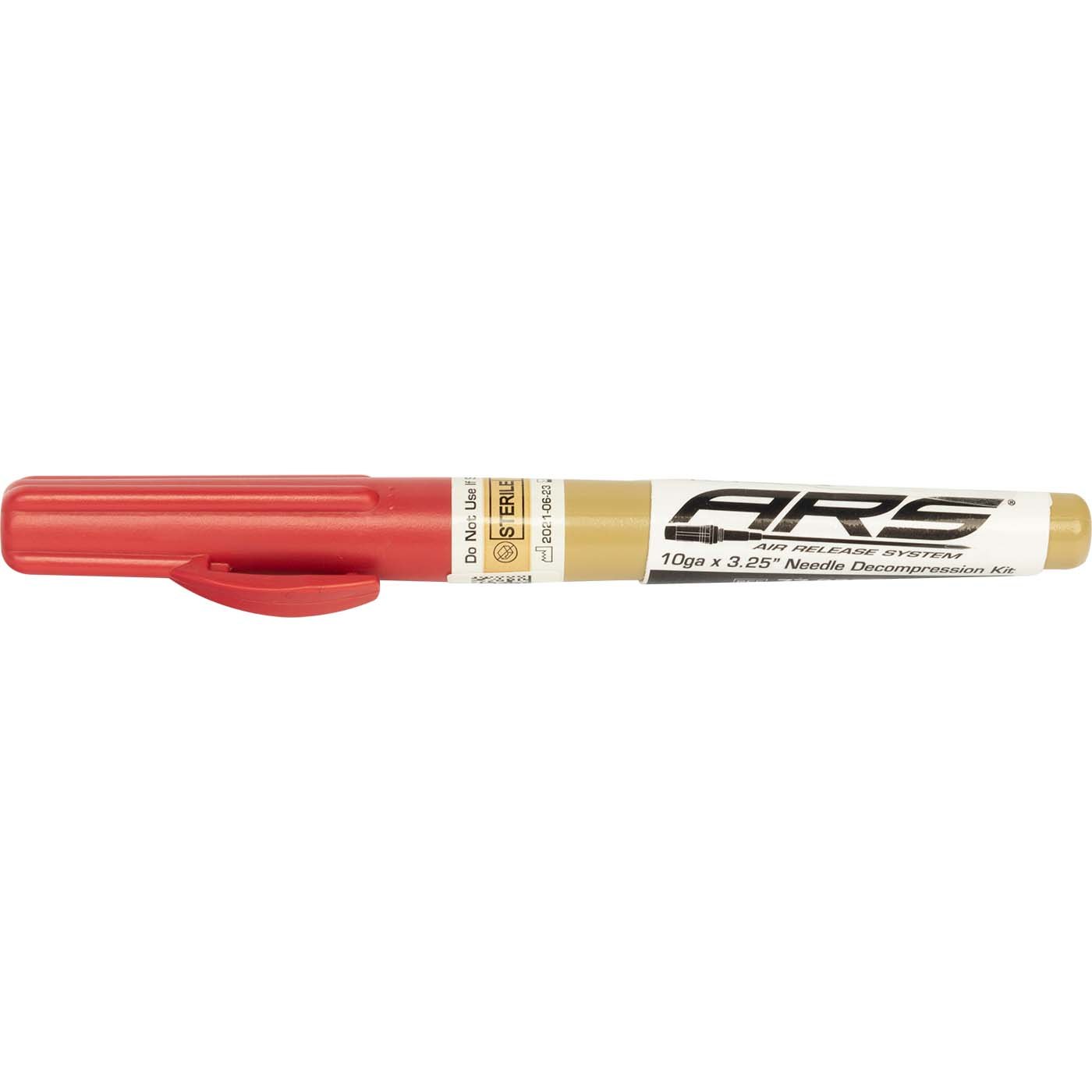
The needle travels in a rigid tube with a twist-off top and pocket clip, so it stays undamaged in vests, pouches and ambulance kits.
Where it is used
Military and tactical medicine, HEMS and ground EMS, emergency departments and field hospitals, used by clinicians trained in managing tension pneumothorax.
In the box
One sterile ARS 10 ga × 3.25 in needle/catheter in a rigid protective case with twist-off cap and clip, with instructions for use. Pack sizes and configurations are confirmed with the quotation.
Clearance & compliance
CE marked (notified body 0050) per the NAR product information sheet; EU authorised representative MDI Europa GmbH · FDA Class I device, listed by North American Rescue (product code GAA; FDA registration and listing database checked 12 Oct 2026) · Prescription device in the USA. Supplied subject to registration in each destination country (MOHAP, DoH, DHA, SFDA or the equivalent authority). Certificates, declarations of conformity, IFUs and registration documents are provided with every quotation. Specifications are indicative and subject to manufacturer change.
Where a country has an official agent or authorised distributor, we source the item through it — or directly from the manufacturer if necessary. Product names, trademarks and images belong to their respective owners.
Questions
Is the ARS 10 ga available in the UAE and the GCC?
KGG sources the ARS 10 ga on request for ambulance services, hospitals, and defence and security medical units in the UAE, Saudi Arabia, Qatar, Kuwait, Bahrain and Oman. It is supplied subject to registration in each destination country, and availability is confirmed with each quotation.
How do I get a price?
Add the ARS 10 ga to your quote list or use Request a quote. We reply with pricing, lead time and the documents available for your country.
Should we choose the 10 gauge or the 14 gauge?
Both are 3.25 in long. The 10 gauge catheter is about 60% larger in diameter and is identified by a brown band; the 14 gauge (ZZ-0056) has an orange band. Choose according to your clinical protocol.
What is the difference from the Enhanced ARS?
The Enhanced ARS (item 10-0064) adds a bi-bevel tapered needle tip, a fenestrated catheter and centimetre depth markings. The standard ARS described here remains in NAR's range; tell us which version your protocol specifies.
Who can use it?
The IFU states it should be used only by people trained in treating tension pneumothorax. It is a prescription device in the USA, and within the EU it is not indicated for paediatric patients or pregnant women.
Can it be reused?
No. The ARS is single use. After the needle is removed it goes into a sharps container, and the catheter is disposed of according to medical protocols.
Request a quote
Get pricing for the ARS 10 ga.
Tell us the quantity, delivery city and whether you are ordering for a facility, a team or a patient. We reply with pricing, lead time and the regulatory documents for your country.

 English
 العربية