KGG and SADA Form an Exclusive Alliance to Take Gulf Enterprise AI from Pilot to Production

Newsroom  /  Updates

Updates

KGG and SADA Form an Exclusive Alliance to Take Gulf Enterprise AI from Pilot to Production

Most AI pilots never reach production. A new exclusive partnership between Kanan General Group and SADA Intelligent Solutions is designed to change that for organisations across the GCC.

By KGG Communications · 4 min read

KGG and SADA Form an Exclusive Alliance to Take Gulf Enterprise AI from Pilot to Production

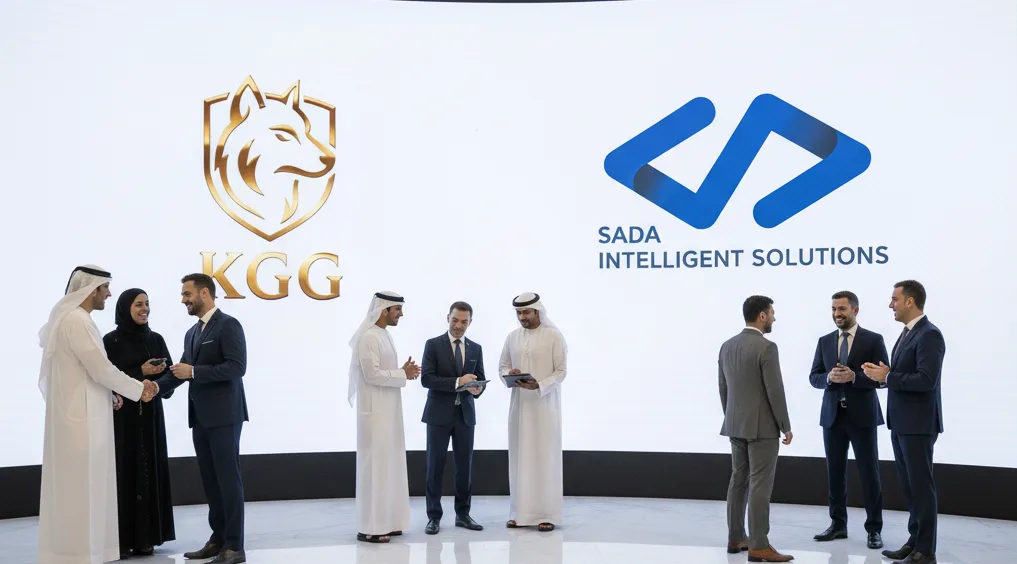
Kanan General Group has formed an exclusive partnership with SADA Intelligent Solutions to sell and deliver enterprise artificial intelligence, automation and data engineering across the Gulf Cooperation Council, betting that the region’s next wave of AI spending will reward whoever can get projects out of the pilot stage.

Under the agreement, KGG will own client relationships, scoping and local delivery from Abu Dhabi, while SADA, a software house that says it has completed more than 100 AI and big-data projects for clients in the United States and Europe, will supply the engineering. The partners are aiming at government entities, healthcare providers, logistics groups, retailers and universities across the six Gulf states.

“We’re not just collaborating; we’re building a strategic alliance. This partnership merges local market intelligence with global AI excellence. Together, we turn data into insight, and insight into measurable value.”

Khair Tamimi, Founder and Managing Director, KGG

Ambition is not the problem

The Gulf is not short of AI ambition. In January 2025 Abu Dhabi announced an AED 13 billion government digital strategy for 2025 to 2027, with plans for more than 200 AI solutions across public services, a full move to sovereign cloud, an expected AED 24 billion contribution to GDP and more than 5,000 new jobs. The UAE’s National Strategy for Artificial Intelligence 2031 sets the same direction at federal level, and Saudi Arabia, Qatar and their neighbours have made similar commitments.

Converting that ambition into results is harder. McKinsey’s 2025 global survey found that 88% of organisations now use AI in at least one business function, yet only about a third have begun to scale it across the enterprise and just 39% report any effect on earnings before interest and taxes. Researchers at MIT’s NANDA initiative, after 150 executive interviews, a survey of 350 employees and a review of 300 public deployments, were blunter: about 95% of generative AI pilots deliver little or no measurable impact on profit and loss.

Why pilots stall

The MIT researchers found that failure rarely comes from the quality of the model. It comes from what they call a learning gap: tools that do not fit the workflow, do not learn from the organisation’s own data and have no clear owner once the demonstration is over. Two findings matter most for Gulf buyers. Solutions bought from specialist vendors succeeded about 67% of the time, while systems built internally succeeded roughly a third as often. And the highest returns came from back-office automation, even though more than half of AI budgets went to sales and marketing tools.

The Gulf adds complications of its own. Much institutional knowledge sits in Arabic, in scanned documents and in records that mix Arabic and English, which off-the-shelf tools handle poorly. Public and regulated entities need to know exactly where data is stored and processed, which rules out many default cloud set-ups. And many capable engineering firms are based far from their clients, with no one on the ground to run workshops, manage change or answer for results.

How the alliance divides the work

The partnership is built along those fault lines. KGG, a family-owned investment and trading group headquartered in Abu Dhabi, handles discovery, use-case selection, procurement, Arabic-first delivery and ongoing support. SADA brings depth in search, natural language processing, data engineering and computer vision, including specialist expertise in Progress MarkLogic.

SADA’s published work shows the kind of problem it is built for. For a major US publisher it built an AI query builder that improves search accuracy across a large digital library. For a global economic organisation based in France it designed a data annotation validation workflow that cut review cycles from weeks to hours, according to the company’s case studies.

In the Gulf, the partners plan to concentrate on four areas: enterprise search and knowledge assistants that answer questions from an organisation’s own documents in Arabic and English, with sources cited; workflow automation that links email, ERP, CRM and approval systems to remove repetitive manual steps; data engineering and annotation that turn unstructured archives into clean, AI-ready data; and cloud migration designed around data-residency rules, with security and cost controls built in.

“Our partnership with KGG reflects a shared vision to accelerate the Gulf’s digital future through trustworthy, high-performance AI solutions that meet the highest global standards for data integrity and security.”

SADA Intelligent Solutions

What buyers should ask first

For executives weighing their next AI investment, the research points to a short set of questions. Which single process causes the most visible delay, cost or error? Is the data behind it clean, or buried in scanned files and email threads? Should the capability be bought, built or delivered by a partner? Who in the business will change the workflow, rather than simply approve the pilot? And what measurable result, such as hours saved or cycle time, should exist within 90 days?

KGG and SADA say they will start every engagement with those questions, followed by fixed-scope pilots with agreed success criteria and, where the numbers justify it, production roll-outs. Organisations exploring a first use case can discuss it with the KGG team or see the full range of AI and cloud technology solutions.

About SADA Intelligent Solutions. SADA is a software house specialising in artificial intelligence, big data and data science, with more than 100 completed projects for international clients in the United States and Europe.

Media enquiries and partnership requests

Contact Us

More news

All news
Articles

Riyadh Signs Health Deals by the Billion This Week. KGG Is Betting on the Clinics That Still Buy One Device at a Time

The Global Health Exhibition opens Monday in Riyadh with 2,200 brands, 500 speakers and the memory of US$35.5 billion in deals last year. KGG, which supplies medical devices and the Envision cloud radiology platform across the GCC, brings one argument to the week: the next phase of Saudi health spending will be won in the kingdom's 3,607 private medical complexes, not in the deal hub.

10 min read

Quick request

en_USEnglish